Building Martial Arts Programs for Kids With ADHD
Research-backed program design, instructor training pathways, and business models for adaptive martial arts classes serving neurodivergent students.
Key Takeaways
- Neurodivergent students represent a massive untapped market: Nearly 240 million children globally live with disabilities that could benefit from adaptive martial arts programs, yet specialized offerings remain rare across the 72,029 US martial arts studios.
- The belt system accidentally optimizes for ADHD brains: Belt-rank progression mirrors variable-ratio reinforcement schedules used by behavioral therapists, providing dopamine-deficient ADHD brains with clear, visible achievement markers that sustain motivation better than conventional classroom rewards.
- Research confirms measurable cognitive gains: A 12-week judo program increased visuospatial working memory in children with ADHD, while taekwondo practice improved selective attention in adolescents with ADHD, suggesting martial arts as a non-pharmacological intervention.
- Program design matters more than style: Successful adaptive programs limit class size to under 10 students, use frequent activity transitions, provide environmental modifications like reduced music or separate practice areas, and emphasize repetitive drills with visual cues.
- Formal training pathways now exist: The Human Development Institute's Adaptive Martial Arts course and IBCCES Certified Autism Center certification equip instructors with disability etiquette, universal design principles, and evidence-based adaptation techniques.
- Hybrid models show strongest outcomes: Studios offering both dedicated adaptive classes and selective mainstream integration report better parent satisfaction and positive cultural influence across entire school populations than either segregated or fully integrated approaches alone.
Why Traditional Dojos Are Launching Adaptive Programs Now
Across the United States in 2025 and 2026, martial arts schools from Sensory TKD in New Jersey to Kovar's in Sacramento have launched or expanded programs explicitly designed for neurodivergent students. The timing reflects both growing clinical evidence and market pressure. Nearly 240 million children globally live with disabilities who could benefit from adaptive martial arts programs, yet the martial arts industry's 72,029 US studios with 18 million participants have largely ignored this demographic.
What changed? Studio operators discovered neurodivergent programs became unexpected revenue generators and community builders. One dojo owner who initially resisted creating a separate adaptive class found that when parents of neurodivergent children requested dedicated programs, the segregated adaptive class became a great influence on the entire karate school, improving instructional quality and culture across all offerings.
The Neurological Match Between Martial Arts and ADHD
Unlike team sports where children with ADHD often spend time on sidelines, martial arts keeps every student active for the entire session, from warm-up through drilling to sparring. This constant physical and mental engagement directly addresses core ADHD challenges.
The research base has strengthened considerably. A 12-week judo program increased visuospatial working memory capacity in children with ADHD, with neurocognitive measurements confirming more effective maintenance processes in the brain. Separately, taekwondo practice improved selective attention in adolescents with ADHD, published in the International Journal of Environmental Research and Public Health, suggesting martial arts could serve as a non-pharmacological method of addressing attentional impairment.
Why the Belt System Works
The belt-rank progression system mirrors operant conditioning schedules that behavioral therapists deliberately use, providing variable-ratio reinforcement uniquely effective at sustaining motivation in dopamine-deficient ADHD brains. A dojo's century-old reward structure may be accidentally optimized for the exact neurological profile that struggles most in conventional classrooms. The belt system links effort directly to visible achievement, providing the clear feedback loop ADHD brains require.
For children on the autism spectrum, the clear rules of the dojo such as bowing, formal titles, and lining up reduce anxiety around interpreting subtle social cues that plague unstructured environments.
Program Design Elements That Drive Success
Leading adaptive programs share specific structural features. Traveling Dojo in Maryland intentionally limits most classes to fewer than 10 students, allowing instructors to provide individualized attention and create more comfortable learning environments. Class size directly impacts outcomes for neurodivergent students who require higher instructor-to-student ratios.
Environmental Modifications
Environment plays a critical role in behavior for ADHD and autism. Successful programs limit the number of people in the gym during adaptive sessions, eliminate background music, or provide quieter practice areas to minimize distractions. Amanda's Adaptive Martial Arts in Arizona became the first martial arts center to earn Certified Autism Center certification from IBCCES, designating that staff underwent specialized training to support autistic and sensory-sensitive students.
Curriculum Scaffolding and Transitions
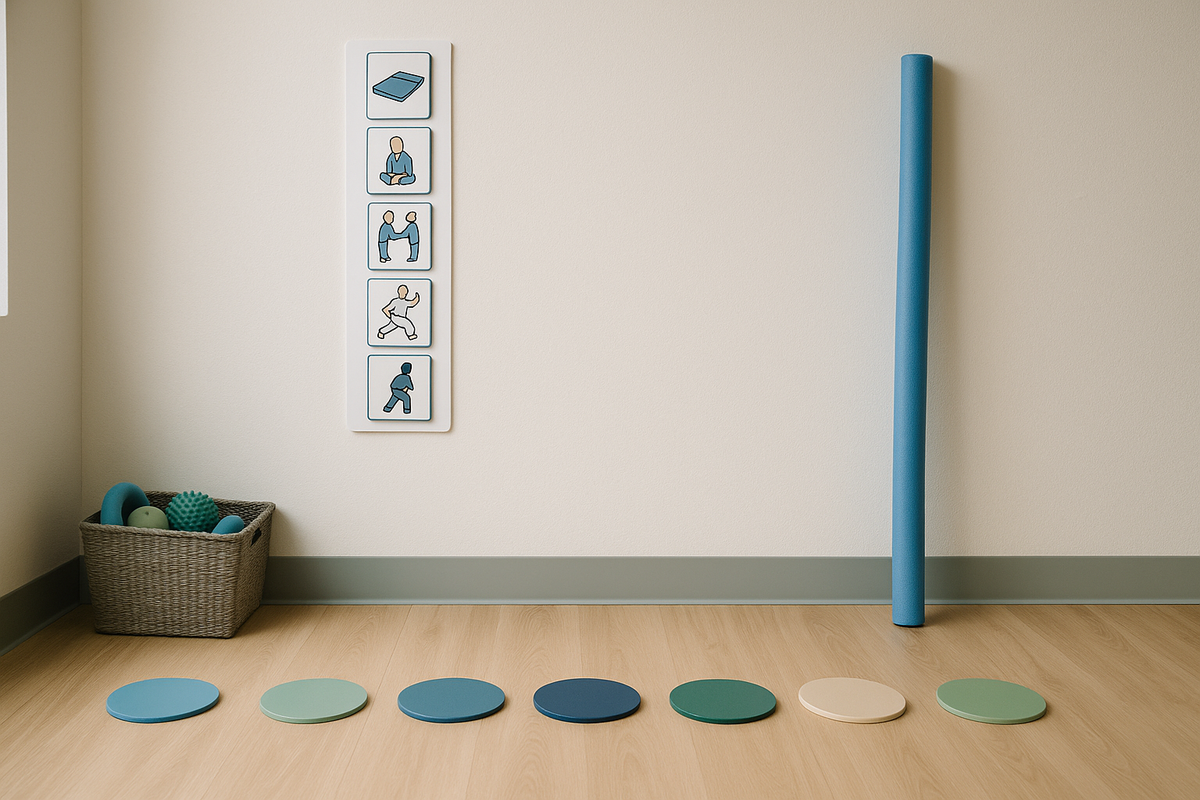
Classes at Gracie Barra Celebration structure sessions with frequent transitions between technique demonstration, partner drilling, movement games, then back to technique, matching the ADHD brain's need for novelty while maintaining structured progression. Instructors use focus anchors like sitting cross-legged or standing in ready stance to provide consistency between activities.
The TREE method introduces rules in the most simplistic way leaving room for expansion. Once students have appropriate stance, they learn a straight jab, then add head placement and protective coverings later. Programs emphasizing repetition, clear step-by-step instruction, brief focused drills, and consistent positive feedback prove most effective.
Sensory Integration Techniques
Martial arts stances and techniques give students clear instructions for hand and foot placement, reducing the urge to fidget. Repetitive movements like punches, blocks, and kicks satisfy sensory needs while reinforcing discipline and control. Instructors trained to provide heavy work proprioceptive drills help children feel grounded or use visual cues to overcome verbal processing delays.
Instructor Training and Certification Pathways
Darrell Mattingly at the Human Development Institute developed HDI's Adaptive Martial Arts training course teaching martial arts instructors about disability etiquette, universal design, and how to adapt teaching to be inclusive. Mattingly serves as president of the Adaptive Martial Arts Association offering resources for instructors and students.
IBCCES offers Certified Autism Center certification for organizations whose staff undergo specialized training. These formal credentialing pathways address the reality that most traditional martial arts instructor training programs include zero content on neurodevelopmental differences or adaptive teaching methods.
Parent Communication Protocols
Sharing relevant information about medication timing, sensory preferences, effective motivators, attention patterns, and medical restrictions helps align expectations and allows instructors to make reasonable accommodations. Leading programs conduct comprehensive intake including health history, functional assessments, and behavioral patterns before the first class.
The Separate Versus Integrated Class Debate
Studio operators face a philosophical and practical choice: dedicated adaptive classes, full integration into mainstream classes, or a hybrid model. One dojo owner initially had no interest in classes exclusively for special needs, believing every kid has special needs, and steered neurodivergent children to typical classes with an assistant. But parents didn't want that approach. They wanted classes of their own.
The emerging best practice appears to be hybrid. Studios offer dedicated adaptive classes where neurodivergent students build foundational skills in optimized environments, then selectively integrate students into mainstream classes when appropriate based on individual readiness. This model addresses both the need for specialized instruction and the goal of inclusion.
Documented Outcomes
A 2025 Italian study involving 31 children in inclusive karate and judo school programs reported improvements in social responsiveness, emotional regulation, and peer tolerance. Structured martial arts game interventions showed the experimental group was significantly better than the control group in sensory ability, social ability, motor ability, language ability, self-care ability and total score. A 13-week martial arts program showed improvement in executive functioning for children with autism, including behavior and emotional control.
What This Means for Studio Operators
Editorial analysis, not reported fact:
The convergence of clinical evidence, credential pathways, and proven business models removes the three traditional barriers that kept adaptive programs out of mainstream dojos: uncertainty about efficacy, lack of instructor training resources, and questions about financial viability. Studio operators considering adaptive programs in 2026 can now point to research-validated protocols, accessible training through HDI and IBCCES, and documented examples of programs that strengthened both revenue and school culture.
The pilot pathway appears straightforward. Start with one weekly adaptive class capped at eight students. Invest in instructor certification through HDI or IBCCES before launch, not after. Conduct comprehensive intake with parents covering medication schedules, sensory triggers, and communication preferences. Budget for environmental modifications like sound dampening panels or visual schedule boards. Measure retention and parent satisfaction at 12 weeks, then decide whether to expand capacity, add age bands, or begin selective mainstream integration.
Studios in competitive suburban markets may find adaptive programs provide meaningful differentiation. The combination of underserved population, research-backed outcomes, relatively low startup costs, and alignment with broader inclusion values creates both mission and margin opportunity for operators willing to invest in specialized training and environmental adaptation.
Sources & Further Reading
- Sensory TKD, adaptive taekwondo program in New Jersey conducting functional neurological exams and customized interventions
- Krav Maga Worldwide research summary, comprehensive review of clinical studies on martial arts for ADHD and autism including judo working memory study and taekwondo attention research
- Human Development Institute Adaptive Martial Arts training, certification program teaching disability etiquette and universal design to instructors
- International Board of Credentialing and Continuing Education Standards, overview of Certified Autism Center program and Adaptive Martial Arts Association resources
- 2025 Italian study on inclusive karate and judo programs, peer-reviewed research documenting social responsiveness and emotional regulation improvements
- Gracie Barra Celebration program design, detailed description of transition-based class structure for ADHD students
- Different Brains case study, dojo owner perspective on evolution from integrated to hybrid adaptive model
Editorial coverage of publicly reported industry developments. Dojo Practice has no commercial relationship with any companies named.