From Tradition to Mechanics: Closing the Alignment Teaching Gap
US martial arts schools face growing pressure to replace alignment dogma with evidence-based biomechanics as injury prevention policies tighten in 2026.
Key Takeaways
- Non-contact injuries dominate in recreational martial arts: Many ligament tears, ankle sprains, and joint injuries occur without strikes or throws, yet prehabilitation programs remain rare in US studios as of 2026.
- BJJ knee injuries stem from biomechanical load patterns: The knee endures constant twisting, squatting, and unpredictable torque during grappling, with evidence-based Joint-by-Joint Training Approach (JBJTA) showing promise for redistributing forces and reducing knee valgus.
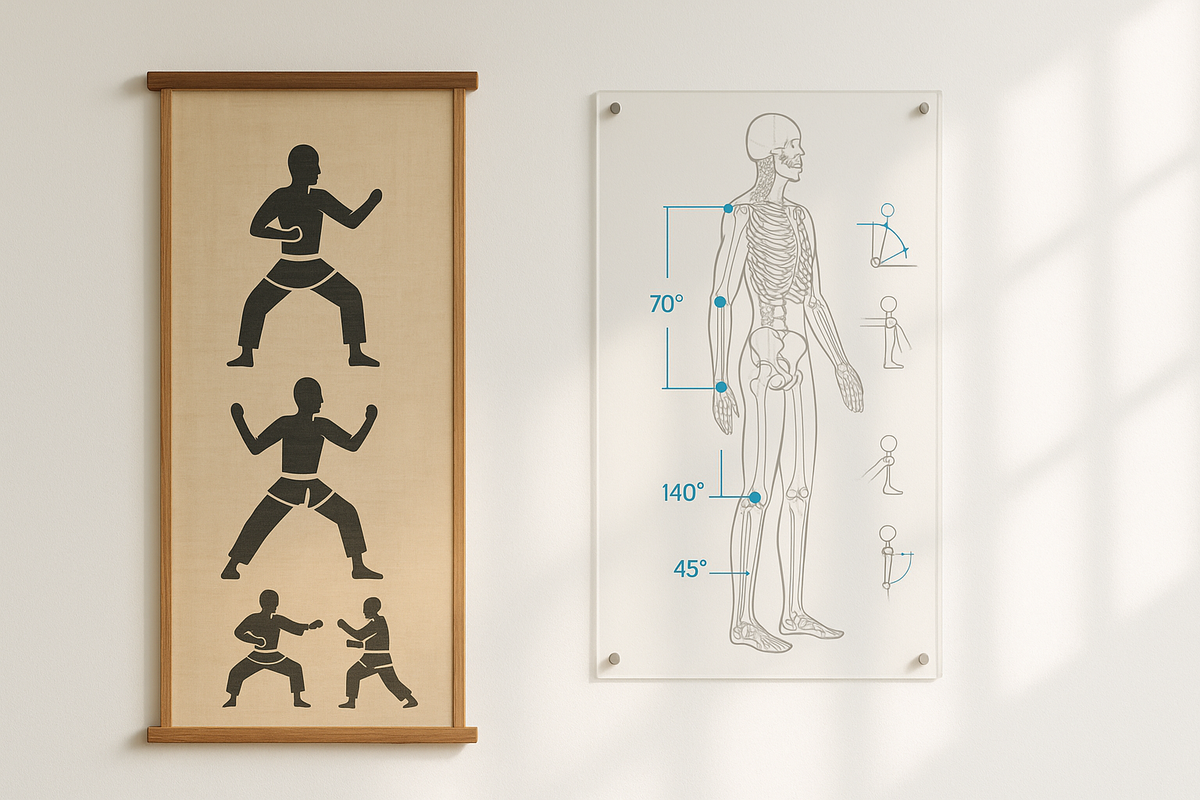
- Karate stance alignment is now measurable with technology: A 2026 smartphone application using Google ML Kit Pose Detection analyzes joint angles and alignment in Shotokan stances, shifting instruction from subjective correction to objective, real-time feedback.
- Shoulder mechanics in MMA require consistency over power: Research confirms shoulder joint angles are more consistent than elbow angles across striking conditions, emphasizing the need for rotator cuff strength and proper punching form to prevent overuse injuries.
- Instructor liability extends beyond active sparring supervision: Courts have held martial arts instructors liable for student injuries when they perform acts that increase danger even outside direct instruction, raising the bar for evidence-based teaching standards.
- US studios are tightening sparring policies in 2026: Schools now implement stricter experience and size matching for open mats and mixed-level sessions to manage intensity gaps that lead to avoidable injuries.
Why Traditional Alignment Cues Fall Short of Modern Biomechanical Standards
Martial arts instruction in the United States has long relied on verbal cues passed down through lineages: "tuck your tailbone," "align your knee over your toe," "rotate from the hips." Yet as of June 2026, the gap between this alignment dogma and what biomechanical research actually supports is widening, with real consequences for injury prevention and instructor liability.
The tension is most visible in recreational clubs, where traditional teaching methods persist despite evidence that many injuries are non-contact events, from ligament tears to ankle sprains, that could be prevented with appropriate prehabilitation. According to a study published in the journal Martial Arts Studies, recreational martial arts have yet to implement evidence-informed prehabilitation programmes widely, even as studios face growing liability exposure and parent expectations for science-backed safety protocols.
At the same time, US martial arts studios are rewriting injury prevention policies in 2026, tightening supervision and pairing rules based on experience and size matching. This policy shift reflects a recognition that intensity mismatches in open mats and mixed-level sessions create avoidable injury risk, particularly for beginners who may not know when or how to tap.
BJJ Knee Injuries and the Biomechanical Load Problem
Brazilian Jiu-Jitsu presents one of the starkest examples of the alignment teaching gap. The knee is the most common area of injury in BJJ due to the sport's demands: constant kneeling, squatting, driving sideways, resisting torque, and loading through unpredictable angles with an opponent's body weight on top.
Traditional instruction often emphasizes static alignment, yet grappling is anything but static. The knee is constantly put into positions it doesn't love during grappling exchanges, which is where injury risk spikes. A newer, evidence-based paradigm offers a more sophisticated approach: the Joint-by-Joint Training Approach (JBJTA) emphasizes biomechanical knee load redistribution, optimizing force distribution throughout the lower limb to alleviate knee stress. This method enhances lower limb alignment, shock absorption, and efficient force transfer, contributing to reduced knee valgus and overall injury risk.
The practical application for instructors is clear. Rather than simply telling students to "protect your knees," athletes can take proactive measures by building strength and flexibility in the muscles that support the knee joint and practicing proper technique and alignment during all movements. This requires teaching progressions that address ankle mobility, hip stability, and quadriceps-hamstring balance, not just drilling techniques.
Karate Stance Mechanics: From Subjective Correction to Measurable Standards
Karate has traditionally taught stances through instructor demonstration and correction, but research on Goju-Ryu Karate-Do confirms that optimal alignment of spinopelvic parameters is a prerequisite for maintaining an upright posture with minimal energy expenditure and harmonious balance when performing various stances. What constitutes "optimal," however, has often been subjective.
In 2026, technology is changing that dynamic. A smartphone application has been developed that supports Shotokan Karate training by analyzing posture and providing real-time feedback, evaluating three fundamental stances using Google ML Kit Pose Detection to extract body landmarks and compute joint-angle and alignment features. This shift from instructor eye-test to objective measurement represents a significant departure from traditional pedagogy.
The biomechanical stakes are meaningful. Proper knee flexion in karate stances is crucial for both performance and injury prevention, and research emphasizes that training for aged or disabled practitioners should be adapted and focused on mastering the balance between stability and agility. Measurable standards allow instructors to individualize progressions based on actual joint angles and postural alignment rather than aesthetic approximation.
MMA Shoulder Injuries and the Consistency Paradox
Mixed martial arts instructors often emphasize power generation in striking, but shoulder injuries are relatively common in MMA due to repetitive motions and impact, with rotator cuff tears occurring from overuse or sudden trauma. The biomechanical reality is more nuanced than "punch harder."
Research indicates that shoulder joint angles are more consistent than elbow joint angles across all test conditions, suggesting that shoulder stability, not elbow snap, is the mechanical foundation of safe striking. Proper punching form includes keeping the fists tight, rotating the hips and shoulders with the punch, and retracting the arm quickly after the strike, which ensures the shoulder joint is biomechanically aligned and reduces unnecessary strain on muscles and tendons.
For instructors, this means drilling shoulder retraction timing and rotator cuff prehabilitation should take precedence over volume striking on heavy bags. A solid foundation of technique helps optimize the biomechanics of movements and allows maximum power while minimizing strain on shoulders, but only if the teaching progressions prioritize joint health over short-term output.
Liability Exposure When Tradition Meets Negligence Standards
The legal landscape for martial arts instruction is shifting alongside the biomechanical research. A combat or grappling sports instructor may be held liable for a student's injuries under a negligence standard of care where he performs an act that increases the danger to the participant while not engaged in active instruction, even though the assumption of risk doctrine generally prevents coach liability absent reckless or intentional behavior.
This matters because professional liability insurance ensures claims of teaching errors or negligence don't end your career, protecting you if a student claims you taught an unsafe move or failed to provide proper supervision. The bar for what constitutes "proper supervision" and "safe instruction" increasingly includes evidence-based biomechanical principles, not just adherence to traditional forms.
As studios tighten pairing rules and supervision protocols in 2026, instructors who continue teaching alignment dogma without understanding the underlying mechanics may find themselves exposed. Courts recognize that participants accepting the risks involved in martial arts does not release instructors or gyms from their duty to provide a safe space and proper training.
Injury Epidemiology Across Disciplines: Where the Risks Actually Lie
Understanding what injuries occur, and how, is essential for evidence-based teaching. In taekwondo, lower limb injuries, particularly to the foot and knee, are most common, with contusions predominating, followed by sprains and ligament tears. This contrasts with the shoulder-focused injury profile in MMA striking and the knee-centric risk in BJJ.
The commonality across disciplines is that many injuries are preventable through targeted prehabilitation and biomechanically informed progressions. Yet recreational martial arts clubs have not yet widely adopted modern prehabilitation exercises despite an emphasis on tradition, leaving a gap between what research supports and what instructors actually implement.
What This Means for Dojo Owners
Editorial analysis — not reported fact:
The convergence of biomechanical research, technology-enabled measurement, tightening liability standards, and evolving parent expectations creates both risk and opportunity for US martial arts school owners in 2026. Continuing to teach alignment and injury prevention purely from lineage and tradition exposes you to both physical and legal risk, while adopting evidence-based progressions positions your school as a leader in safety and professionalism.
Practical steps include integrating prehabilitation exercises specific to your discipline's injury profile: ankle and hip stability drills for taekwondo schools, rotator cuff and scapular strengthening for MMA programs, and JBJTA-informed lower limb training for BJJ academies. Consider adopting objective measurement tools, whether smartphone pose-detection apps for karate or video analysis for grappling mechanics, to move beyond subjective "that looks right" corrections.
Review your pairing and supervision policies with an eye toward experience and size matching, particularly for open mats and mixed-level sparring. Document your injury prevention protocols and instructor training on biomechanical principles; this documentation serves both pedagogical and liability-protection purposes. Finally, ensure your professional liability insurance is current and adequate, recognizing that courts are applying negligence standards even outside active instruction when instructors increase participant danger.
The gap between tradition and mechanics is closing. Schools that bridge it proactively will differentiate themselves on safety, retain students longer, and reduce both injury rates and legal exposure.
Sources & Further Reading
- Why Martial Arts Studios Are Rewriting Their Injury Prevention Policies in 2026 — industry analysis of 2026 policy shifts in US schools
- MASS-12 Prehabilitation Programme (ScienceDirect) — research on evidence-based injury prevention in recreational martial arts
- MASS-12 Study (Cardiff University Press) — academic study on prehabilitation gaps in martial arts clubs
- BJJ Injuries: Physical Therapy & Rehab — clinical overview of knee injury mechanisms in Brazilian Jiu-Jitsu
- Knee Injury Prevention via Joint-by-Joint Training Approach — biomechanical research on JBJTA in grappling sports
- Biomechanics of Goju-Ryu Karate Stances — study on spinopelvic alignment and stance mechanics
- Smartphone Postural Analysis App for Shotokan Karate — 2026 research on ML-based stance evaluation technology
- Top Techniques for Avoiding Shoulder Injuries in MMA — practical guide to shoulder biomechanics in striking
- Preventing Shoulder Injuries in MMA: A Comprehensive Guide — analysis of shoulder joint consistency and form
- Taekwondo Injury Epidemiology — research on lower limb injury patterns in taekwondo
- Greener v. M. Phelps Inc. BJJ Liability Case — legal analysis of instructor negligence standards
- Why Every Martial Arts Instructor Needs Liability Protection — overview of professional liability insurance for instructors
Editorial coverage of publicly reported industry developments. Dojo Practice has no commercial relationship with any companies named.