Girls-Only Martial Arts Classes: A Growing Business Niche
Female youth sports participation hit a 12-year high, yet girls-only martial arts tracks remain uncommon. Here's the retention and differentiation case.
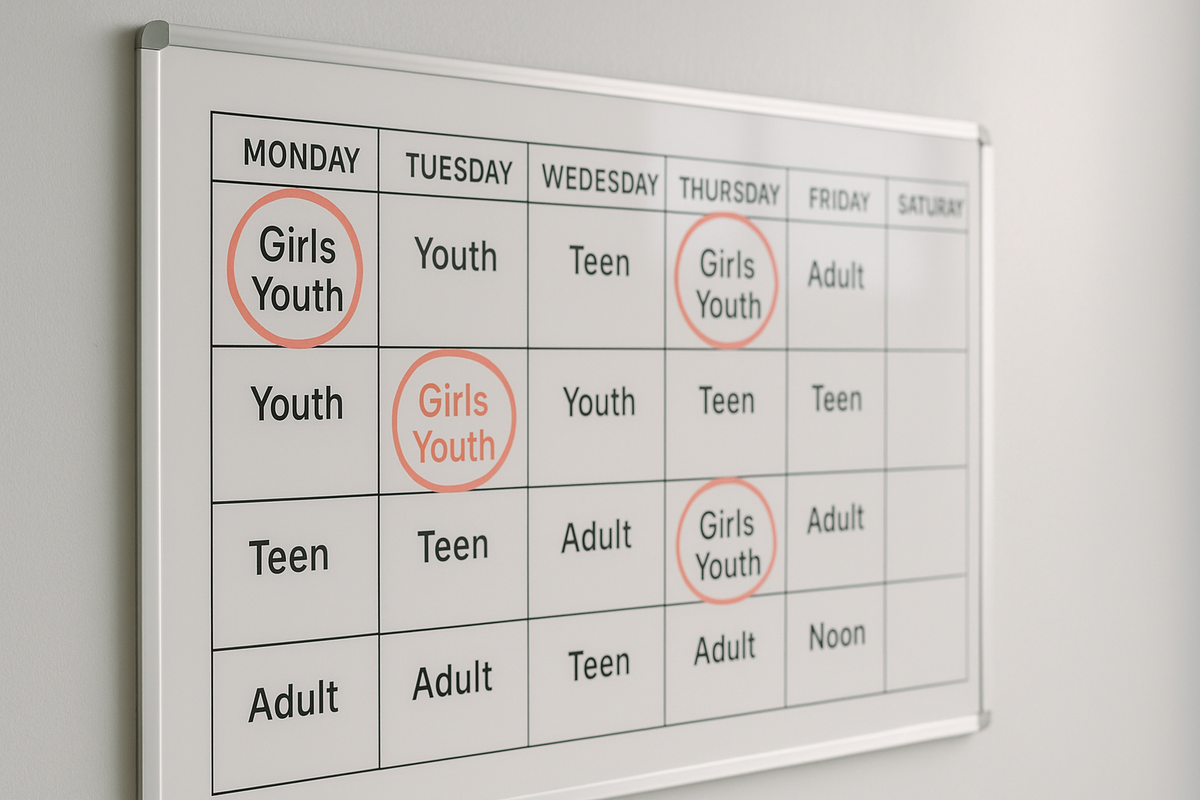
Key Takeaways
- Female youth sports participation hit a 12-year high in 2024, with 37% of girls ages 6–17 playing sports regularly, while 77% of afterschool program demand remains unmet, creating structural tailwinds for specialized programming.
- Girls-only martial arts classes address critical early-stage retention challenges by reducing physical intimidation and allowing technique modification for smaller frames in environments where over 90% of typical class rosters are male.
- Women's participation in martial arts has doubled over the past decade, concentrated in kickboxing, Brazilian Jiu-Jitsu, Krav Maga, and Muay Thai, yet girls-only youth tracks remain uncommon despite proven enrollment gains at implementing studios.
- Market saturation is forcing differentiation: studio count grew 12% annually since 2021 while participation remains flat, making niche programming a competitive necessity as 76,364 US studios compete for the same student base.
- Real-world programs from Gracie Jiu-Jitsu, Balance Studios, and Invictus Martial Arts demonstrate viable models spanning beginner-only onboarding, family-focused tracks, and bridge pathways to co-ed advanced classes.
The Demand Signal: Record Female Participation Meets Unmet Afterschool Capacity
Girls ages 6–17 played sports regularly at the highest rate since 2012 in 2024, with 37% participating and marking a third consecutive year of growth. Simultaneously, female participation in martial arts has doubled over the past decade, driven by self-defense demand and functional fitness appeal in disciplines like kickboxing, Brazilian Jiu-Jitsu, Muay Thai, and Krav Maga.
Yet this demographic surge coincides with a critical supply gap. Seventy-seven percent of afterschool program demand remains unmet, with cost cited as the top barrier by 56% of parents. For martial arts studios competing in an increasingly saturated market, girls-only class tracks represent a differentiation lever that addresses both family demand and retention economics.
Why Gender-Separated Programming Works: Comfort, Safety, and Pedagogical Fit
The case for girls-only tracks rests on environmental and physical realities. Over 90% of students in the average Jiu-Jitsu class are men, creating intimidation barriers for new female students. In Brazilian Jiu-Jitsu specifically, women may feel uncomfortable grappling closely with male partners, especially during the critical first weeks when dropout risk peaks.
Physical design matters equally. Men generally have higher body weight and physical strength than women, which can increase the risk of accidental injuries. Girls-only classes allow instructors to modify techniques for smaller frames and lower strength baselines without disrupting co-ed pacing. Most women's-only programs are beginner-friendly and designed to accommodate students with no prior experience, emphasizing foundational movements and body awareness at a tailored pace.
Retention Economics in the First 90 Days
About one in three youth athletes drop out of organized sport every year, typically because it stopped being fun or they felt they weren't good enough. Dropout is front-loaded: the highest risk occurs in the first weeks, before training becomes a habit, which takes a median of 66 days and can extend to 254 days. Girls-only programming directly addresses this window by eliminating early-stage intimidation and creating peer cohorts that normalize the beginner experience.
Real-World Implementation Models Across Disciplines
Studios implementing girls-only tracks vary widely in structure, but share common design principles. Gracie Jiu-Jitsu in California offers Women Empowered, a leverage-based curriculum focused on defending against larger opponents and addressing the most common attacks women face. The program is explicitly beginner-focused and self-defense oriented.
Balance Studios in Philadelphia launched the city's first women's-only Jiu-Jitsu program in 2002, built around the Helio Gracie self-defense system. Invictus Martial Arts in Albuquerque positions its women's program as an onboarding track taught exclusively by female instructors, with an explicit goal of transitioning students to co-ed classes once comfort and competence develop.
Solarte BJJ runs a weekly beginner women-only class for women and teen girls, demonstrating a minimal-footprint model that doesn't require wholesale schedule restructuring. Common disciplines for gender-separated tracks include kickboxing, Brazilian Jiu-Jitsu, Muay Thai, and self-defense-focused training, often blending techniques from multiple styles.
Competitive Context: Differentiation in a Saturated Market
Studio count has grown approximately 12% per year since 2021, while participation is flat to slightly down. In a market with 76,364 US studios competing for a finite student base, retention separates winners from churners. A 60–70% retention rate is average; closing the gap to 75–85% is where durable profit lives.
Girls-only tracks improve retention by creating belonging early in the student journey. They also unlock word-of-mouth advantages: families with daughters become ambassadors for a program that addresses a felt need most studios ignore. In a landscape where US families spent an average of $1,016 per child on their primary sport in 2024, up 46% in five years, parents demonstrate clear willingness to invest in specialized programming that delivers perceived safety and developmental fit.
Infrastructure and Instructor Development
Building sustainable girls-only programs requires instructor pipelines and support systems. The Association of Women Martial Arts Instructors was founded to empower advanced women martial artists via paths of learning, training, and ranking, providing high-quality education, training, support, networking opportunities, advancement, and professional recognition to women instructors and business owners.
AWMAI's premier annual event is a conference focused on instructor and school owner needs, covering curriculum development, business and marketing strategy, pedagogy, and operational excellence. For studios launching girls-only tracks, access to trained female instructors and tested curriculum frameworks reduces implementation risk. Youth N Motion Martial Arts actively recruits female instructors and expands family-based programs to meet growing demand, signaling broader industry movement toward demographic-specific programming.
What This Means for Studio Operators
Editorial analysis, not reported fact:
Girls-only tracks are not a social initiative. They are a retention and differentiation tool in a market where growth depends on holding students longer than competitors. The operational question is not whether to launch such a program, but how minimally to test one without disrupting existing revenue. A single weekly beginner class for girls ages 8–14, taught by a female instructor or advanced female student, represents a low-cost pilot that generates data on enrollment pull, retention delta, and family satisfaction.
Studios should resist the temptation to treat girls-only classes as permanent silos. The Invictus model, which positions gender-separated training as a bridge to co-ed participation, balances the developmental benefits of safe onboarding with the long-term goal of integrating students into the full curriculum. Pricing should reflect specialization: niche programming typically commands the higher end of the $125–$200 monthly tuition range, especially when marketed as self-defense or empowerment focused.
The infrastructure exists. Female instructor networks, tested curricula, and business mentorship are accessible through AWMAI and discipline-specific organizations. The demand signal is clear. The question is whether your studio will capture it before a competitor does.
Sources & Further Reading
- 50 Martial Arts Industry Statistics for School Owners (2026), comprehensive data on youth participation, retention, and family spending
- Martial Arts Industry Statistics, market saturation and revenue benchmarks
- The Importance of Women-Only BJJ Classes, pedagogical and safety rationale for gender-separated training
- Association of Women Martial Arts Instructors, professional development and instructor networks
- Gracie Jiu-Jitsu Women Empowered Program, curriculum example focused on self-defense and leverage techniques
- Invictus Martial Arts Women's Self-Defense, bridge model transitioning students to co-ed classes
- The Complete Guide to Student Retention for Martial Arts Schools, dropout timelines and habit formation data
Editorial coverage of publicly reported industry developments. Dojo Practice has no commercial relationship with any companies named.