Managing Multi-Age Classes in Small Dojo Spaces (2026)
Small-footprint dojos are reaching 820% occupancy by layering simultaneous multi-age classes. Here's the economics, ratios, and systems that make it work.

Key Takeaways
- Small-footprint economics are shifting dojo strategy: Studios in spaces as small as 800 to 1,500 square feet are layering simultaneous multi-age classes to reach occupancy rates of 820% by Year 5, maximizing revenue per square foot without capital expansion.
- Instructor-to-student ratios must scale by age and skill: Effective simultaneous class management requires 1:8 to 1:10 for children ages 4 to 7, 1:12 to 1:18 for middle-level students, and up to 1:20 for advanced cohorts who need less hands-on correction.
- Teaching to the middle fails both ends of the skill spectrum: When one instructor manages thirty students across ten belt ranks, advanced students lose anatomical precision and novices miss foundational cues, creating retention risk in mixed-level environments.
- Staffing structure determines scalability: Studios under 75 students operate with owner plus one part-time instructor; 75 to 150 students require one to two full-time instructors; 150 to 250 students need two to three full-time instructors plus front desk support to manage simultaneous programming without quality collapse.
- Age-based curriculum segmentation is non-negotiable: Proven frameworks divide students into 3–5, 6–8, 9–13, teens 13–17, and adults, each with distinct class length, progression milestones, and attention requirements that enable safe zone-based instruction.
- Profitability in 2026 comes from intentional program design, not volume: Success depends on repeatable systems for scheduling, zone design, and assistant instructor positioning, not on adding more classes at random.
Why Single Large Classes No Longer Deliver Profitability
The economic model for martial arts studios has shifted decisively in 2026. A tried and true approach to running a small footprint martial arts school that turns a decent profit is to rent a small space, maybe even as small as 800 square feet. This constraint is not a limitation but a profitability lever. When the same mat space generates revenue across multiple simultaneous age groups, rent and base payroll costs produce higher returns per hour.
The numbers tell the story. Occupancy rises from 450% in Year 1 to 820% in Year 5, and billable days move from 20 to 22 per month. Occupancy rates exceeding 100% signal time-slot overlap, the defining feature of simultaneous multi-level programming. Studios that cling to the single large class model leave revenue on the table while paying the same overhead.
The Cognitive and Physical Cost of Teaching to the Middle
When one instructor manages thirty students spanning ten belt ranks, instructional quality collapses at both ends of the skill spectrum. To manage the vast gap in proficiency, the instructor is forced to teach to the middle of the room. Advanced students lose access to the anatomical precision their bodies require, while beginners miss foundational cues buried in generic drills.
For the mature martial artist, this setup introduces distinct physical and cognitive friction. It leads to a frustrating choice: risk joint damage by keeping up with a ballistic pace, or settle for generic instruction that misses the anatomical precision your body actually needs. This friction directly impacts retention. Students who plateau or feel unsafe vote with their feet.
Instructor Ratios That Protect Quality Across Simultaneous Zones
Effective simultaneous programming depends on ratio discipline. Healthy instructor-to-student ratio per class is 1:12 to 1:18. For children's classes, especially ages 4 to 7, that ratio should move closer to 1:8 or 1:10, as young kids need more direct attention. These younger cohorts require constant behavioral correction and safety monitoring that cannot be delegated to senior students.
For adult and middle-level classes, 1:15 works well. Advanced classes can often run at 1:20 without a quality drop because students at that level need less hands-on correction. This scaling of attention directly influences how many simultaneous groups a lead instructor can manage. Zone-based instruction works only when assistant instructors or advanced students positioned in secondary zones reduce the lead instructor's cognitive load.
Staffing Structure: The Hidden Cost of Simultaneous Programming
As enrollment grows, staffing must scale in discrete steps to preserve instructional quality. Under 75 students, an owner plus one part-time instructor covers most operations. Between 75 and 150 students, one to two full-time instructors with continued owner involvement becomes necessary. Moving up to 150 to 250 students, two to three full-time instructors with a part-time front desk is the standard.
These thresholds are not arbitrary. They reflect the cognitive and physical limits of instructors managing overlapping age groups in shared space. Assistant instructors positioned in secondary zones allow the lead instructor to focus on high-value corrections rather than crowd control. Studios that defer hiring past these thresholds experience instructor burnout and quality erosion in specific age cohorts, typically the youngest and most advanced groups.
Age-Based Curriculum Segmentation and Zone Design
Simultaneous multi-age programming requires intentional curriculum boundaries. Age brackets typically include kids 3–5, 6–8, 9–13, teens 13–17, adults. A good framework is Alliance Jiu-Jitsu Fort Mill's model—ages 3–5, 6–8, 9–13—each with its own curriculum, class length, and progression milestones.
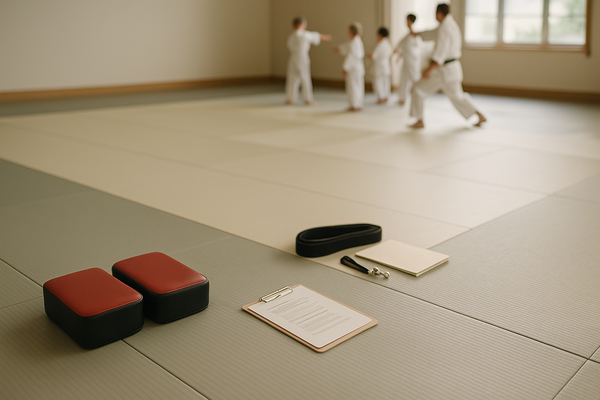
These divisions are not marketing conveniences. They reflect developmental stages in motor control, attention span, and injury risk. A three-year-old cannot safely train alongside a thirteen-year-old in the same drill sequence. Curriculum segmentation enables zone-based instruction, where an assistant manages the 3–5 cohort in one corner while the lead instructor runs technique progression with 9–13 students on the main mat. Without this structure, simultaneous classes devolve into supervised chaos.
The Systems That Prevent Quality Collapse
Many school owners believe scale comes from working harder. That belief is incorrect. Scale comes from working smarter through repeatable processes. Simultaneous multi-age programming demands operational discipline in three areas: scheduling logic, zone design, and retention monitoring.
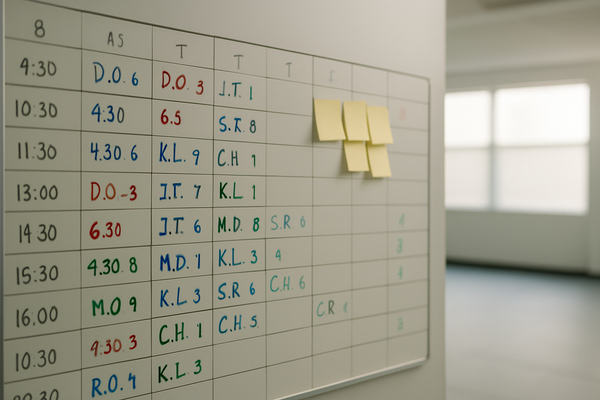
Watch the peak evening classes first, since that is where mat space, belt levels, and instructor coverage usually limit growth. If one class stays weak, merge it or move it before you add more schedule time that still carries the same rent. Testing one change at a time—moving age groups, splitting belt levels, or adding an assistant only when attendance justifies the cost—prevents the common mistake of adding complexity before proving demand.
A scalable academy, also called a growth ready school, can add students and staff without losing quality. This requires documented onboarding for assistant instructors, clear zone assignments, and retention tracking segmented by age group and belt rank. When retention dips in a specific cohort, it signals that simultaneous programming has exceeded instructor capacity in that zone.
Red Flags: When Simultaneous Classes Have Gone Too Far
Three warning signs indicate a studio has pushed simultaneous programming past sustainable limits. First, instructor burnout manifests as shortened class times, reduced demonstration quality, or frequent assistant instructor turnover. Second, quality drops become visible in specific age groups, typically the youngest cohorts who require the most supervision. Third, retention dips in mixed-level cohorts where advanced students feel under-challenged and beginners feel lost.
These signals are correctable. The solution is not to abandon simultaneous programming but to adjust ratios, add assistant coverage in over-stressed zones, or split a high-density time slot into staggered starts. The key metric is revenue per instructor hour, not total enrollment. A well-structured 1,200-square-foot dojo with disciplined ratios and zone design will outperform a chaotic 3,000-square-foot facility every time.
What This Means for Studio Operators
Editorial analysis, not reported fact:
The shift to simultaneous multi-age programming is not a trend but a structural response to the economics of small-footprint studio operation in 2026. Studio operators who continue to rely on single large classes will face margin pressure as rent and labor costs rise without corresponding revenue growth. The alternative is not simply adding more classes to the schedule but designing a staffing and curriculum structure that allows multiple age-specific cohorts to train in the same space at the same time without sacrificing instructional quality.
This requires upfront investment in assistant instructor training, curriculum segmentation, and zone-based class design. It also demands operational discipline: tracking retention by age group and belt rank, monitoring instructor-to-student ratios in real time, and adjusting scheduling logic when specific cohorts show signs of stress. Studios that master these systems will achieve occupancy rates and revenue per square foot that were unthinkable under the old single-class model. Those that do not will find themselves competing on price in a market where profitability is no longer guaranteed by volume alone.
Sources & Further Reading
- Why Large Dojo Classes Can Fail You After 45, addressing the physical and cognitive friction of mixed-level instruction
- Martial Art School Business Models, covering small-footprint profitability strategies
- How to Start a Martial Arts School, detailing instructor ratios, staffing thresholds, and age-based curriculum frameworks
- 2026 to Build Scalable Martial Arts School, examining systems and repeatable processes for growth-ready academies
- How to Grow Martial Arts Academy 2026, providing scheduling logic and retention monitoring tactics
- Most Profitable Martial Arts Programs 2026, analyzing intentional program design versus random class additions
Editorial coverage of publicly reported industry developments. Dojo Practice has no commercial relationship with any companies named.