Mindfulness & Ritual: Retention Tools for US Dojos in 2026
Opening ceremonies, flow state coaching, and breathwork aren't just tradition—they're neuroscience-backed retention tools combating the 50% first-year dropout rate.
Key Takeaways
- Opening and closing ceremonies serve as psychological "on-ramps" and "off-ramps" that help students mentally transition into and out of training, bookending practice with structure that builds retention through ritual consistency.
- Flow state in martial arts requires four documented conditions—intense concentration, goal clarity, immediate feedback, and proper challenge-skill balance—and can be deliberately cultivated rather than left to chance.
- Breathwork practices, including nasal breathing and percussive diaphragmatic techniques used by the Gracie family, activate the parasympathetic nervous system to reduce tension, prevent injury, and maintain focus during high-stress positional work.
- Mokuso (silent meditation) performed during opening ceremonies takes only 3-5 minutes but primes students neurologically for the flow state by establishing mindfulness before physical training begins.
- US dojos face a 50% first-year dropout rate, making mindfulness rituals not just cultural traditions but measurable retention tools grounded in neuroscience and student experience design.
Why Traditional Ceremonies Are Psychological Retention Architecture
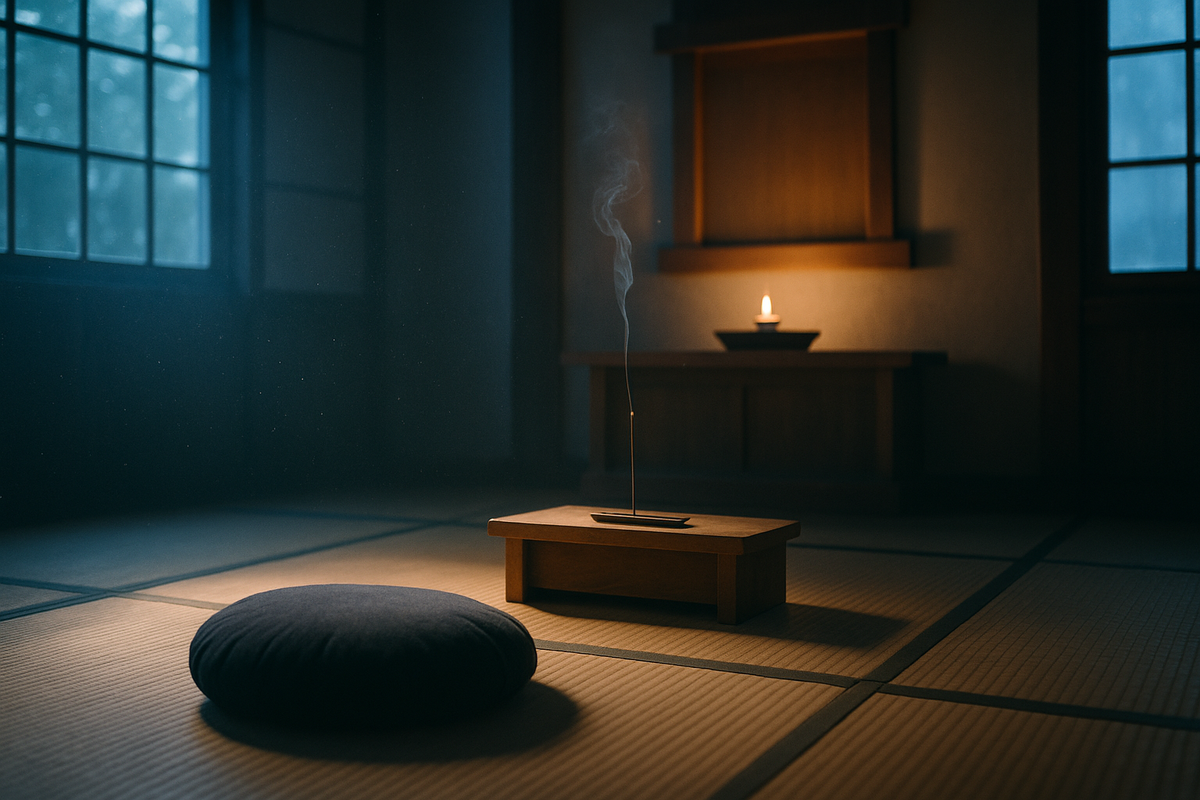
The opening ceremony in a traditional karate class is based on courtesy and respect, but its function extends far beyond etiquette. According to guidance from the Charles Fink Karate Dojo, these ceremonies are performed in seiza (formal seated position) or musubi dachi (formal standing position) and include a period of mokuso (silent meditation). The ritual serves to bookend practice and contextualize training.
These acts function as what instructors now call "on-ramps" and "off-ramps," helping students mentally prepare for what is about to happen in the dojo and then decompress to re-enter the normal world. In taekwondo schools, the ceremony carries additional national and cultural signaling: classes typically display three flags (American, Olympic Rings, and South Korean), and the instructor bows to the flags before the senior student calls "kyung nae" to signal the class bow, done out of respect for country, art, origin, and history.
Instructors report these rituals help instill discipline and focus, reminding students that karate is not merely about physical prowess but also a mental and spiritual journey. As US dojos face retention challenges in 2026, these ceremonies are being reconsidered not as optional tradition but as foundational retention architecture.
Flow State: From Accidental Byproduct to Coached Objective
Flow, a mental state of complete immersion where a person experiences effortless focus, loss of self-consciousness, and time distortion, is now being taught as an explicit coaching tool rather than an accidental byproduct of training. Entering the flow state does not happen by accident; it emerges from deep preparation that is technical, mental, and physical.
Researcher Steven Kotler, writing in the Harvard Business Review, identified four conditions that produce flow: intense concentration, goal clarity, feedback on performance, and a properly matched challenge-to-skills ratio. These conditions are used continually in martial arts training. If the challenge level is set lower than the student's skill level, they will not enter a flow state, will not improve, will not enjoy class, and will become bored.
During flow, martial artists often relate the experience to the concept of mushin (無心) or "no-mind," where ego and internal judgment disappear and the self dissolves into pure action. Physiologically, the body enters a zone of harmony where heart rate stabilizes, breath becomes rhythmic, and tension melts away. Neurochemicals including dopamine, endorphins, anandamide, and serotonin combine to create deep focus, heightened pattern recognition, and emotional balance.
Meditation Before Training: Closing the Instructor Practice Gap
Meditation just before training was a common practice in martial arts in the United States, but it has since fallen out of favor. Industry observers now suggest that bringing back martial arts with meditation might be what martial arts training needs.
The guidance is specific: prime students for a flow state by incorporating mindfulness meditation during warmups. Since class time is at a premium, this should only take 3 to 5 minutes. This brief mokuso period, when incorporated consistently, creates the neurological conditions for the concentration and goal clarity that Kotler's research identifies as flow prerequisites.
Breathwork for Performance and Parasympathetic Activation
Nasal breathing activates the parasympathetic nervous system and helps the body relax during training, which is hugely beneficial for getting into a flow state and not being overly tense on the mat. Excess tension puts students at risk of injuring themselves or others.
Breathing comprises the foundation of any physical activity, including martial arts. It fuels the body with oxygen, increases energy levels, and helps regulate heart rate. Proper breathing provides stability, balance, and power to movements while aiding in maintaining mental focus, reducing stress, and calming the mind during intense moments.
Timing matters: syncing breath with movement becomes crucial to optimizing performance. During striking techniques, exhale forcefully on impact to generate power and release tension; during defensive moves or evasive actions, inhale deeply to increase focus, remain calm, and conserve energy.
BJJ-Specific Techniques: Percussive Breathing
When practicing jiu-jitsu, Rickson Gracie and members of the Gracie family use a unique breathing technique called percussive breathing. This entails taking a regular breath in and then exhaling quickly and repeatedly (saying "shh, shh, shh"), which are actually rhythmic diaphragmatic contractions. The volume of air exchanged via the lungs increases using percussion breathing techniques.
The best thing a practitioner can do when practicing BJJ is to be mindful of breathing. The worst thing is to stop breathing every few seconds. When students get into vulnerable situations, most people frequently miss normal breathing patterns, especially true for Brazilian jiu-jitsu novices. Breathing exercises provide mindfulness so students don't miss breathing when trapped in stressful positions.
What This Means for Dojo Owners
Editorial analysis — not reported fact:
The 50% first-year dropout rate facing US dojos in 2026 is not primarily a curriculum problem. It is an experience-design problem. Students who feel psychologically anchored to a practice through ritual, who experience regular flow states during training, and who have tools to self-regulate stress through breathwork are measurably more likely to continue past the initial frustration curve.
For dojo owners, this means three concrete implementation opportunities. First, reinstate or formalize opening and closing ceremonies if you have allowed them to erode in favor of maximizing mat time. The 3-5 minutes spent in mokuso is not wasted time; it is onboarding time for the nervous system. Second, explicitly teach the four flow conditions (concentration, goal clarity, feedback, challenge-skill match) as coaching language in your instructor training, so your teaching staff can engineer flow rather than hope for it. Third, integrate breathwork cues into drilling and sparring rather than reserving breath discussion for cardio conditioning alone.
These are not stylistic choices. They are retention infrastructure. In a market where students have unlimited fitness alternatives and declining discretionary time, the dojos that will thrive are those that offer not just technique but a reliably transformative psychological experience. Mindfulness rituals are how you architect that experience at scale.
Sources & Further Reading
- Charles Fink Karate Dojo: Opening and Closing Ceremonies — detailed description of mokuso, seiza, and the psychological function of ceremonial bookends in traditional karate practice
- Evolution Martial Arts: Opening and Closing Ceremonies in Taekwondo — explanation of flag protocol, kyung nae commands, and cultural signaling in taekwondo schools
- Black Belt Magazine: Flow State in Martial Arts — coverage of Steven Kotler's four flow conditions, mushin, neurochemical effects, and the case for reintroducing meditation into warmups
- BJJEE: The Importance of Breathing in BJJ — overview of nasal breathing, parasympathetic activation, percussive breathing techniques from Rickson Gracie, and mindfulness under positional stress
- Evolve MMA: Mastering the Art of Breathing in Martial Arts — guide to breath-movement synchronization, strike timing, and defensive breathing patterns
Editorial coverage of publicly reported industry developments. Dojo Practice has no commercial relationship with any companies named.