Proper Alignment & Joint Safety in Martial Arts Instruction
How biomechanical research, accessible video tools, and graded exposure protocols are reshaping injury prevention in US dojos in 2026.
Key Takeaways
- Proper alignment, not brute force, prevents common martial arts injuries: Recent biomechanical research shows that correct technique, adequate warm-up, and stance modifications that protect joints are essential across all age groups, addressing sprains, strains, and joint injuries that most frequently affect knees, ankles, shoulders, elbows, and hands.
- US dojos face a medical documentation gap: Community martial arts programs typically do not require the medical oversight mandated for high school and college sports, creating liability and safety gaps that forward-thinking dojo owners are addressing through biomechanical education and injury-informed teaching frameworks.
- Grappling arts show predictable joint injury patterns: Elbow pain is consistent across Judo, Sambo, and Brazilian Jiu-Jitsu due to gripping and hyperextension from joint locks, while knee injuries in BJJ stem from leg entanglements and heel hooks that damage the MCL, menisci, ACL, and posterolateral corner.
- Wearable tech and smartphone video analysis are democratizing biomechanical feedback: Accessible tools now enable US coaches to assess striking mechanics in real time, moving beyond traditional mirror-based correction to diagnose form errors with evidence-based precision.
- Graduated return-to-training protocols reduce reinjury risk: Rehabilitation cues like "no-gi grips only" or "finish every round with 50% left in the tank" represent a shift from binary rest-or-train thinking toward graded exposure models informed by exercise science.
- Insurance providers recognize alignment training as risk reduction: Dojos with documented biomechanical training protocols report lower claim frequency, with martial arts insurance costs ranging from $400 to $2,500 annually depending on style, location, and risk management practices.
Why Biomechanics Education Matters for US Martial Arts Instructors in 2026
Biomechanical analysis plays a fundamental role in enhancing athletic performance and preventing injuries through qualitative and quantitative methods, according to research published in Molecular & Cellular Biomechanics in March 2025. Yet US dojos remain fragmented on how to teach and supervise proper technique, even as technologies like optical devices, electromyography, and inertial tracking systems become available to analyze athletes' movements in detail.
The stakes are measurable. Community sports and martial arts tend not to require the medical documentation mandated by high school and college sports, creating liability and safety gaps. Meanwhile, the most common martial arts injuries are sprains, strains, cuts, and bruises, with broken bones also occurring. These injuries frequently affect the knee, ankle, shoulder, and elbow, with hands particularly vulnerable during striking martial arts and concussions occurring in contact disciplines.
The Injury Atlas: What US Instructors See on the Mat
Understanding injury patterns is the first step toward prevention-focused instruction. In grappling arts specifically, elbow pain is consistent across Judo, Sambo, and Brazilian Jiu-Jitsu due to high levels of gripping and pulling, with damage to the ulnar collateral ligament occurring when arms are hyperextended from joint lock applications like armbars and americanas.
Knee injuries follow a similar pattern. Knee pain is common in BJJ due to increased interest in leg lock entries and submissions, with leg entanglements and heel hook attempts often leading to damage to the MCL, menisci, ACL, and posterolateral corner from significant rotational forces. Striking arts present their own challenges: stress fractures occur when bones are struck with repetitive force, such as checking kicks in Muay Thai or repeatedly hitting a heavy bag with inadequate wrist support, requiring around eight weeks of complete rest for proper healing.
Alignment as Injury Prevention: What the Research Shows
Recent 2024–2025 studies show that correct technique rather than brute force, adequate stretching and warm-up exercises, and stance modifications that prevent strains on joints while maintaining effectiveness are essential for injury prevention across age groups. This finding carries practical weight for curriculum design.
Proper alignment of the body ensures maximum force application and reduces the risk of injury, including the alignment of the hand, wrist, shoulder, and hip during a punch or kick. In striking mechanics specifically, effective techniques require proper body mechanics, focusing on generating power from hips and core and transferring it through arms and into strikes by engaging the entire body. Recent research on Goju-Ryu Karate spinopelvic alignment biomechanics published in 2025–2026 underscores the importance of understanding balance principles, noting that adapting the center of gravity while keeping balance and stability facilitates the execution of stances with only minor compromise on effectiveness.
How US Dojos Are Implementing Real-Time Biomechanical Feedback
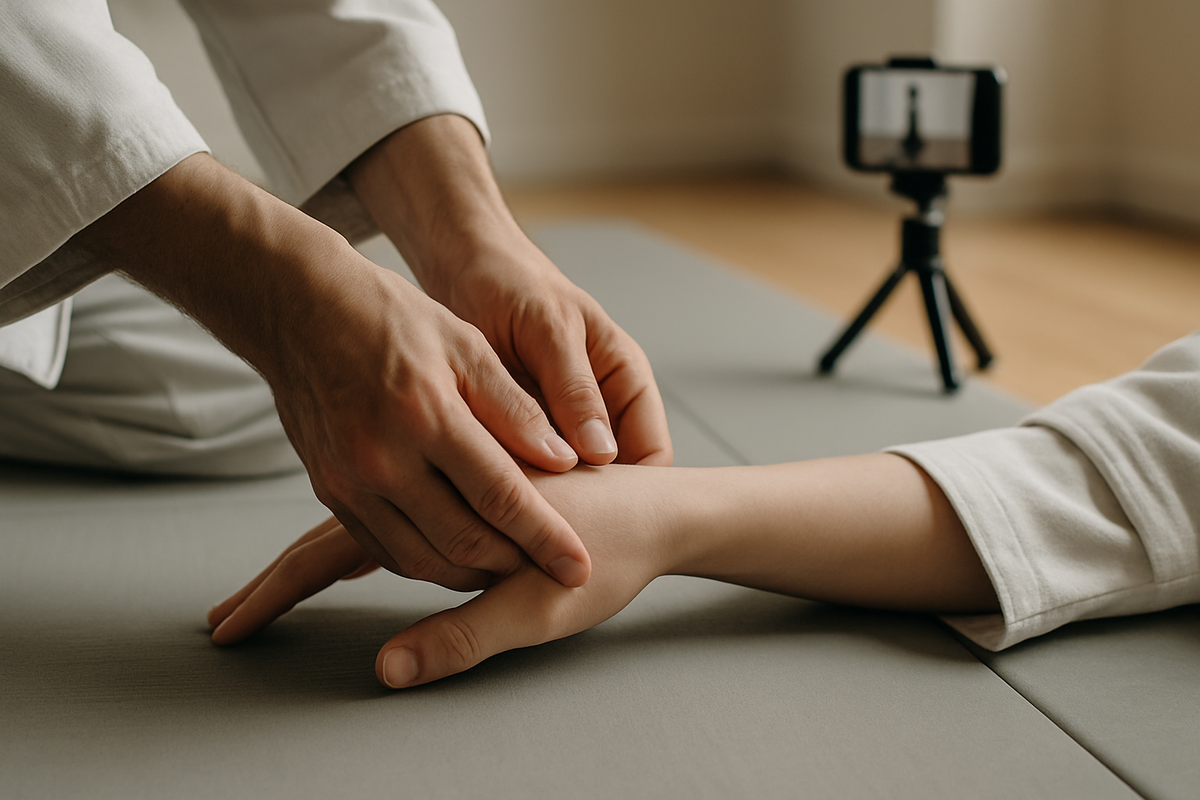
Technology democratization is reshaping instruction. Recent validation shows that accessible tools like smartphone cameras can be used for practical, in-the-field assessment of striking mechanics by coaches, moving beyond traditional mirror-based correction. This shift allows instructors to diagnose form errors in real time without expensive motion-capture equipment.
The trend aligns with broader 2026 market positioning around longevity and sustainable training. Marketing language increasingly emphasizes injury prevention as a value proposition, with BJJ gyms noting that Jiu-Jitsu develops strength through leverage, pressure, and control rather than relying on external weights, building a strong core, stable joints, and balanced muscle development through functional movement, which reduces the risk of overuse injuries commonly seen in traditional weight training.
The Graded Exposure Model: Injury-Informed Teaching Protocols
Rehabilitation cues like "no-gi grips only," "ensure you finish every round with 50% left in the tank," "try and survive in bottom position," or "complete 5 sparring rounds with no forearm pump" lead to more graded exposure to full speed training and result in picking up more technical skills along the way. This represents a shift from binary rest-or-train thinking toward graduated return-to-sport protocols informed by exercise science.
The approach addresses overuse patterns directly. Setting realistic goals and working with your body instead of against it can go a long way in sidestepping stress fractures and overuse injuries, particularly important when practitioners increase training frequency or intensity.
Liability, Insurance, and the Business Case for Biomechanics Training
Martial arts dojos, schools, academies, and gyms all need protection against losses due to risks like student injury lawsuits, with the average cost of martial arts insurance ranging from $400 to $2,500 per year depending on the style of martial arts taught, business location, and other factors. Insurance providers now see alignment and supervision as risk-reduction levers, with dojos that maintain documented biomechanical training protocols reporting lower claim frequency.
Several strategies can help prevent martial arts injuries, such as using proper protective equipment and having thorough training and supervision in new techniques, yet the medical documentation gap persists. Forward-thinking dojo owners are addressing this through formalized biomechanical education, alignment-focused curricula, and injury-informed teaching frameworks that extend beyond mere liability management.
The Defensive Technique Research Gap US Instructors Should Know About
Most martial art biomechanics studies have concentrated more on the offensive rather than on the defensive aspect, yet an in-depth study of defensive techniques is equally important since the real application of self-defense requires an individual to defend first and counter-attack second. This research gap means many US instructors lack evidence-based frameworks for teaching defensive alignment and injury-safe escapes.
Meanwhile, martial arts biomechanics is a field of research with a relatively short history, with first reports dating back to the 1990s, and the greatest interest in this subject is among authors from the United States, which is the undisputed leader just ahead of Brazil. Recent US research intensity has focused on roundhouse kicks, striking form, kinetic energy transfer, and defensive positioning, gradually filling knowledge gaps instructors face.
What This Means for Dojo Owners
Editorial analysis — not reported fact:
The convergence of accessible biomechanical tools, clearer injury-pattern research, and insurance industry recognition creates a rare alignment of incentives. Dojo owners who invest in biomechanics education this year position themselves ahead of likely regulatory tightening around youth sports safety documentation, while simultaneously differentiating their programs in a market where "longevity" and "sustainable training" resonate with aging millennial practitioners.
Practical starting points include integrating smartphone video review into belt testing protocols, adopting graded exposure cues for students returning from injury, and documenting alignment checkpoints in curriculum materials. For grappling schools, explicit instruction on safe joint lock application and tap-out culture reduces elbow and knee injury rates. For striking programs, wrist alignment drills and progressive heavy bag protocols address stress fracture risk before it compounds.
The insurance cost range of $400 to $2,500 annually means that even modest claim-frequency reductions justify the time investment in formalizing biomechanical protocols. More importantly, instructors who can articulate why a technique is safe, not just that it works, build deeper technical literacy in their student base and reduce attrition from preventable injuries.
Sources & Further Reading
- Molecular & Cellular Biomechanics: Martial Arts Movements and Injury Prevention (March 2025) — peer-reviewed research on biomechanical injury prevention across martial arts disciplines, published March 2025
- Chicago Wushu: The Science Behind Martial Arts – Understanding Biomechanics (September 2024) — US dojo-focused primer on biomechanics, alignment principles, and injury prevention strategies
- PubMed Central: Goju-Ryu Karate Spinopelvic Alignment Biomechanics (2025–2026) — research on balance principles and biomechanics of spinopelvic alignment in traditional karate
Editorial coverage of publicly reported industry developments. Dojo Practice has no commercial relationship with any companies named.