2026 Martial Arts Equipment Market: Safety, Smart Tech & Women's Gear
Protective gear grows 40%+ as dojo owners prioritize safety compliance, women reach 30% of practitioners driving gender-specific equipment demand, and smart tracking tech reshapes training.
Key Takeaways
- Protective gear is growing fastest in the mixed martial arts equipment market as of 2026, driven by heightened safety awareness and stricter training regulations, with purchases of gloves, pads, and protective gear up over 40% compared to earlier years.
- Women now represent 30% of martial arts participants, up from 20% a decade ago, creating significant demand for gender-specific equipment and apparel with new brands like Alchemize Fightwear and Athena Fightwear building premium positions in women's BJJ, MMA, and kickboxing gear.
- Smart gear and wearable sensors are reshaping dojo training programs in 2026, with technologies like smart punching bags that track strikes and motion-tracking wearables providing performance analytics that enhance training effectiveness and member engagement.
- The US martial arts studio industry reached $21.0 billion in 2026 with 72,029 studios, growing at a CAGR of 15.3% between 2021-2026, creating acute equipment procurement demands for dojo owners serving expanding memberships.
- MMA gloves command 38.42% of the equipment market in 2024, driven by frequent replacement cycles due to wear and tear, making them the top-selling product category with sustained demand from both professional and amateur segments.
- Online retail is outpacing brick-and-mortar stores in martial arts equipment sales growth as of 2026, with direct-to-consumer channels offering broader product selection and convenience for both individual practitioners and bulk-buying dojo owners.
Why Protective Gear Innovation Dominates 2026 Equipment Spending
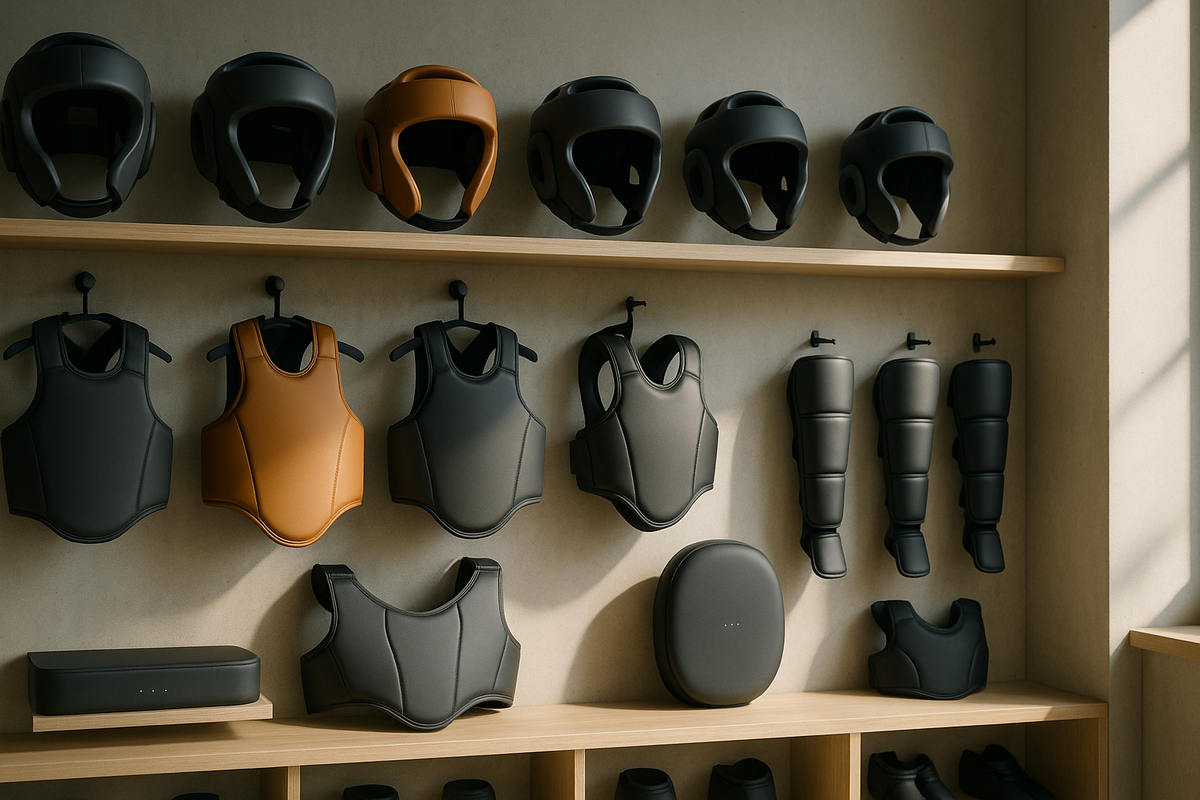
Protective gear has emerged as the fastest-growing segment in the martial arts equipment market this year, reflecting a fundamental shift in how dojo owners prioritize safety compliance. According to research from Fortune Business Insights, purchases of gloves, pads, and protective gear have grown by over 40%, driven by heightened awareness of injury prevention and the adoption of stricter regulations in both training and competition environments.
The technology behind protective equipment has undergone substantial refinement in recent years. Products like Betterguards now provide martial artists with advanced ankle protection designed specifically for the lateral movements and pivoting actions common in combat sports. Joint protection technology has advanced considerably, reducing the incidence of chronic injuries that historically shortened athletic careers and diminished quality of life after retirement from competition.
For dojo owners making procurement decisions in 2026, buyers should prioritize products with verified impact protection meeting ASTM F2569 standards, dense construction, and antimicrobial properties, especially for shared or high-humidity environments. This focus on certification and material science reflects the increasing liability awareness among studio owners and the expectations of safety-conscious parents enrolling children in martial arts programs.
MMA Gloves Maintain Market Leadership Despite Competition
MMA gloves command 38.42% of the mixed martial arts equipment market in 2024, making them the dominant product category. This leadership position is sustained primarily by frequent replacement cycles due to wear and tear, with both professional and amateur segments contributing to ongoing demand. The mixed martial arts equipment market reached USD 1.51 billion in 2025 and is expected to grow at a CAGR of 4.52% to USD 1.88 billion by 2030.
The Women's Gear Opportunity: From 20% to 30% Market Share
Women now represent approximately 30% of martial arts participants, up from 20% a decade ago, according to industry growth analysis. This demographic shift is creating significant commercial opportunities for dojo owners who recognize that female practitioners require equipment designed for different body mechanics, sizing needs, and training preferences.
Women's participation in MMA specifically is on the rise, contributing to a notable increase in demand for gender-specific equipment and apparel. New brands like Alchemize Fightwear and Athena Fightwear are carving out premium positions by designing women's-specific BJJ, MMA, and kickboxing gear including rash guards, spats, hand wraps, and sports bras tailored to female athlete bodies and training needs.
This trend extends beyond apparel to protective gear. Traditional chest protectors, groin guards, and mouthguards designed for male athletes often fit poorly and provide inadequate protection for female practitioners. Dojo owners who stock women-specific protective equipment signal to potential members that their programs genuinely accommodate all students, not simply tolerate female participation in a male-designed training environment.
Smart Gear Integration: Performance Tracking Enters the Dojo Floor
The integration of smart technology into training gear represents one of the most significant equipment trends in 2026. Wearable sensors now track movements and techniques with remarkable precision, while smart punching bags that track strikes provide real-time performance data that enhances training effectiveness and member engagement.
Virtual reality training applications let practitioners refine timing and distance against simulated opponents, complementing traditional sparring without excessive physical strain. AI coaching systems analyze training videos to identify technical flaws and suggest corrections. Multi-functional training gear, such as uniforms made from advanced breathable fabrics with integrated sensors, are in high demand among tech-savvy practitioners.
For dojo owners, the ongoing development of smart gear and digital training platforms presents new revenue streams and competitive differentiation opportunities. Studios that incorporate performance tracking technology can offer data-driven progress reports to members, providing tangible evidence of improvement that supports retention and justifies premium membership pricing.
Distribution Shift: Direct-to-Consumer Channels Reshape Procurement
Online retail is outpacing traditional brick-and-mortar stores in sales growth as of 2026, driven by the convenience of direct-to-consumer channels and broader product selection. This shift affects dojo owners in two ways: as consumers purchasing equipment for their own training, and as business owners making bulk procurement decisions for their studios.
Organizations such as training academies and competition clubs increasingly focus on bulk procurement strategies that emphasize safety compliance and replacement schedules. Direct relationships with manufacturers through online B2B channels often provide better pricing than traditional sporting goods distributors, though dojo owners must balance cost savings against the value of local supplier relationships for urgent replacement needs.
Mat Selection: Discipline-Specific Requirements Drive Purchasing
Flooring represents one of the most significant capital investments for dojo owners, and material science advances have made mat selection increasingly specialized by discipline. When the majority of training takes place on the ground, such as in grappling or MMA, dojo owners should select slightly softer, thicker, and more durable material that has a fall height rating of at least 4 feet, with surface texture that does not cause friction burns during ground work.
For striking martial arts like karate or taekwondo, a 1-inch thickness of high-density foam provides the ideal cushion and support. Buyers should prioritize products with verified impact protection meeting ASTM F2569 standards, dense construction, and antimicrobial properties, especially for shared or high-humidity environments. Modular interlocking tiles between 1.5 and 2 inches thick offer the best versatility for studios teaching multiple disciplines or reconfiguring training spaces.
The US taekwondo equipment market alone was valued at USD 0.8 billion in 2024 and is projected to grow from USD 0.85 billion in 2025 to USD 1.2 billion by 2033, with a CAGR of approximately 4.9%. This growth reflects both increased participation and the replacement cycles inherent in high-impact training surfaces.
Brand Landscape: Venum, Hayabusa, and Authenticity Economics
In 2026, Venum represents how combat sports branding can operate at an enterprise level without losing its edge. The brand has maintained market leadership by balancing mass-market accessibility with credibility among competitive athletes. Hayabusa has built its reputation on technical precision and product engineering, making it a favorite among athletes who prioritize longevity and protection over aesthetic considerations.
Fairtex demonstrates that tradition, when handled thoughtfully, is not a limitation but a competitive advantage. Rooted deeply in Muay Thai culture, Fairtex's branding emphasizes authenticity. In 2026, Fairtex stands as a reminder that authenticity cannot be manufactured; it must be maintained through consistent quality and cultural respect. Kingz, whose approach to Brazilian Jiu-Jitsu apparel reflects a deeper philosophy of authenticity, consistency, and community, embodies values increasingly prized by modern consumers who reject disposable fast fashion in favor of durable, purpose-built equipment.
Heavy Bag Selection: Weight, Construction, and Training Application
As a general rule, dojo owners should choose heavy bags that are approximately half the average user's body weight for optimal resistance and durability. Classic hanging bags offer the most authentic training experience for boxing and martial arts. Premium brands like Fairtex and Cleto Reyes craft cylindrical bags ranging from 4 to 6 feet in length with weights between 70-150 pounds.
A speed bag improves timing, coordination, and rhythm, while a heavy bag builds striking power, endurance, and total-body conditioning. For studios serving diverse populations, maintaining a range of bag weights and styles accommodates different training goals and body types. The integration of smart heavy bags that track strike force, speed, and combinations adds a technology component that appeals to data-driven members and provides instructors with objective performance metrics.
What This Means for Dojo Owners
Editorial analysis — not reported fact:
The convergence of safety compliance pressures, female athlete inclusion, and smart technology adoption creates both opportunity and risk for dojo owners making equipment decisions in 2026. Studios that invest in women-specific gear and protective equipment meeting current safety standards position themselves to capture the fastest-growing demographic segments while reducing liability exposure. The 30% female participation rate represents a near-tripling of the addressable market for women's gear compared to a decade ago, making gender-specific equipment procurement a revenue opportunity rather than a niche accommodation.
Smart gear adoption presents a more complex calculation. While performance tracking technology offers legitimate training benefits and member engagement advantages, the upfront investment and ongoing maintenance requirements may not suit all business models. Studios serving competitive athletes and tech-savvy younger demographics will likely see faster return on smart equipment investments than traditional family-oriented programs. The key decision point is whether the technology serves genuine training objectives or represents expensive novelty that distracts from fundamental skill development.
The shift toward online procurement channels rewards dojo owners who approach equipment buying strategically rather than reactively. Establishing direct relationships with manufacturers for bulk purchases of consumables like gloves and protective gear can significantly reduce per-unit costs, but requires upfront capital and storage capacity. Studios should calculate replacement cycles for high-wear items and negotiate volume pricing accordingly, balancing cost savings against the flexibility of just-in-time purchasing through local suppliers.
Finally, the brand landscape rewards authenticity and specialization. The success of discipline-specific brands like Fairtex in Muay Thai and Kingz in BJJ suggests that dojo owners should prioritize equipment that signals cultural competence and technical seriousness to prospective members. Generic "martial arts equipment" may cost less initially but fails to communicate the specialized expertise that justifies premium membership pricing in an increasingly competitive studio market.
Sources & Further Reading
- IBISWorld Martial Arts Studios Industry Report — US market size, growth rates, and studio count data for 2026
- Fortune Business Insights: Mixed Martial Arts Equipment Market — Market size projections, product category breakdowns, and growth trends through 2030
- Market Research Intellect: Taekwondo Equipment Market — Discipline-specific equipment market valuation and forecast 2024-2033
- ASTM F2569-19 Standard — Specification for impact attenuation of surface systems under and around martial arts throwing and grappling equipment
Editorial coverage of publicly reported industry developments. Dojo Practice has no commercial relationship with any companies named.