Managing Attendance Without It Becoming a Full-Time Job
Manual attendance tracking costs dojo owners 10-15 hours weekly. Digital systems reclaim that time while providing retention insights that directly impact profitability.
Key Takeaways
- Manual attendance tracking costs dojo owners 10-15 hours per week in administrative work—time that could be spent on teaching, program development, or student engagement instead of updating spreadsheets and chasing down billing issues.
- Attendance data serves as an early warning system for retention risk, allowing instructors to identify disengaged students before they cancel; boosting retention by just 5% can increase profits by 25% to 95%, while acquiring new students costs 5 to 25 times more than retaining existing ones.
- Free and low-cost digital solutions exist for every dojo size, from DojoMaster's permanent free tier for up to 20 students to 1club's free access for schools with up to 100 students, with mid-market options starting at $49 per month.
- Software ROI is compelling but implementation resistance remains the biggest barrier—a dojo owner spending 5 hours weekly on manual admin wastes $7,800 annually at $30/hour, while the cheapest software costs approximately $288 per year, representing a 27x return on investment.
- The martial arts industry is consolidating rapidly, growing from $8.16 billion in 2020 to a projected $21.2 billion in 2026, making operational efficiency a competitive necessity as franchises scale with integrated tech stacks.
Why Attendance Tracking Has Become Your Operational Backbone
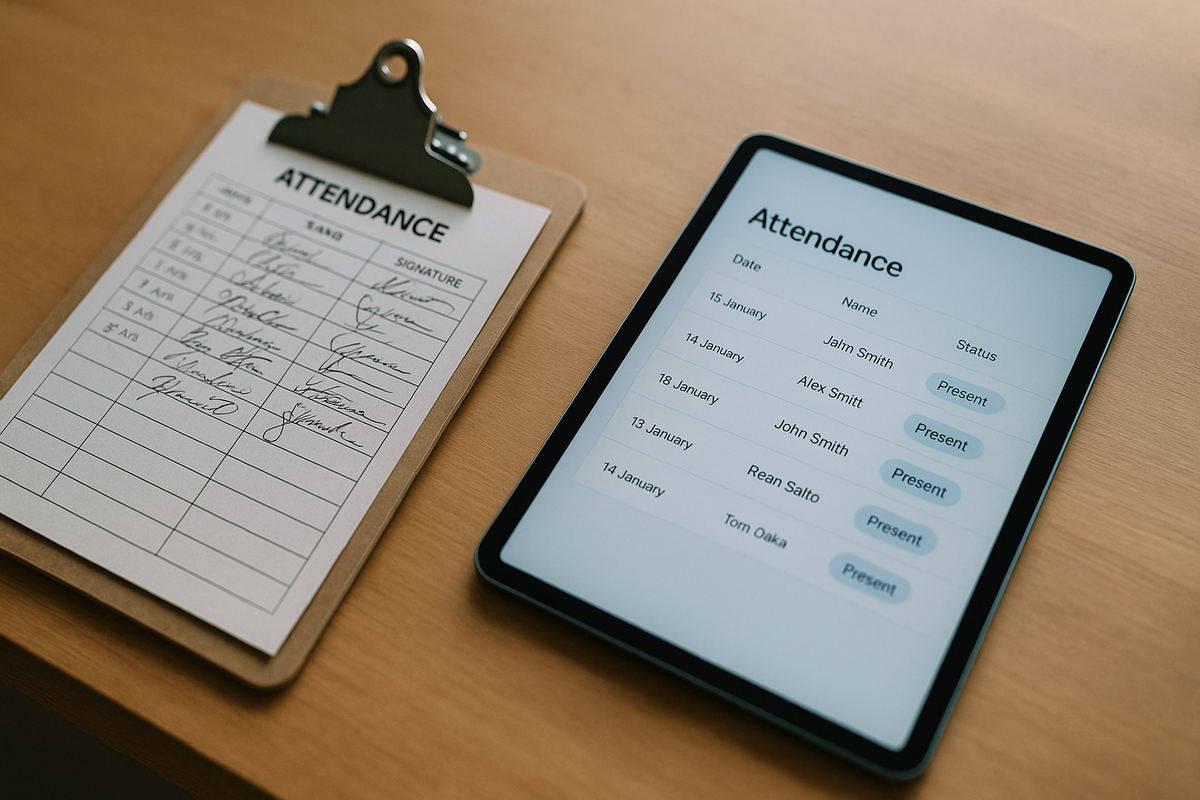
Picture the typical dojo front desk during check-in: students rush through the door, parents pepper you with questions about belt testing, younger students need help tying their gi, and somewhere in that chaos, you're trying to accurately mark attendance on a clipboard. Later that evening, you'll transfer those handwritten notes into a spreadsheet, cross-reference who owes payment, and try to remember which students have been absent lately.
According to DojoTrack, dojo owners relying on manual systems spend 10 to 15 hours per week on administrative tasks that could be automated. This time drain directly contributes to instructor burnout, which costs dojos between 50% and 200% of an instructor's annual salary when they leave. The irony is stark: the administrative burden meant to track student engagement is burning out the very instructors who create that engagement.
Attendance tracking has evolved beyond simple roll call into a strategic business intelligence system. When you maintain accurate attendance records, you can identify students who have stopped attending before they formally cancel their memberships, creating intervention opportunities that directly impact your bottom line. Research shows that boosting student retention by just 5% can increase profits by 25% to 95%, while acquiring a new student costs 5 to 25 times more than retaining an existing one.
The Hidden Cost of Manual Systems
Manual attendance tracking creates three compounding problems that extend far beyond the immediate time burden. First, it prevents pattern recognition. When attendance data lives in handwritten logs or scattered spreadsheets, you cannot easily identify which students are at risk of dropping out or which class times consistently underperform. About 67% of fitness memberships go unused, highlighting how critical consistent attendance monitoring is for long-term retention.
Second, manual systems create billing disconnects. When attendance records don't automatically sync with payment systems, students who have stopped attending may continue being billed, or conversely, active students might slip through billing cracks. These errors damage trust and create awkward conversations that could have been prevented.
Third, manual tracking consumes your most valuable resource during class time. Every minute spent calling out names and marking clipboards is a minute not spent observing student technique, providing personalized feedback, or creating the engaging atmosphere that keeps students coming back.
Digital Solutions Across Every Budget Tier
The good news: attendance automation no longer requires enterprise-level investment. The 2026 software landscape offers legitimate options for dojos of every size and budget.
Free Tiers for Small Schools
For schools just starting out or operating with fewer than 20 active members, DojoMaster offers a permanent free tier with no credit card required, no countdown timer, and no data hostage tactics. The free plan includes basic scheduling, kiosk check-in, attendance tracking, and belt progression features. 1club provides free access for up to 100 students with full belt tracking, making it viable for mid-sized schools operating on tight margins.
Affordable Mid-Market Tools
Once you scale beyond free tier limits, specialized martial arts platforms offer focused functionality without overwhelming complexity. Martialytics entry pricing starts at $49 per month, scaling by active student count with all features included at every tier. Gymdesk's attendance tracking uses QR codes for quick check-ins, simplifying the process for both students and staff. Member Solutions offers contactless check-in via the MemberAssist App, allowing students to check in ahead of class or by scanning a digital membership card upon arrival.
Comprehensive Platforms
Larger schools or those seeking integrated marketing, billing, and student management alongside attendance tracking typically choose comprehensive platforms like Zen Planner, Mindbody, or iClassPro. These systems handle everything from attendance to automated marketing sequences for absent students, though they carry correspondingly higher monthly costs.
The ROI Math Everyone Avoids Discussing
Here is the uncomfortable calculation most dojo owners resist making: if you spend 5 hours per week on manual administrative tasks (attendance counting, belt tracking, payment follow-ups), that amounts to 260 hours annually. At even a modest $30 per hour valuation for your time, you are losing $7,800 annually to tasks that software automates.
The cheapest dojo software on available lists costs around 288 euros per year, representing a 27-times return on investment based solely on time reclaimed. This calculation does not account for additional revenue preserved through better retention, fewer billing errors, or the ability to take on more students because your administrative capacity has expanded.
Context matters here: monthly operating costs for a martial arts school range from $15,000 to $50,000, with annual expenses running $60,000 to $100,000. Software typically represents 2 to 5% of total operating costs, making it one of the highest-leverage investments available to dojo operators.
Why Smart Dojo Owners Still Resist (And How to Overcome It)
Despite compelling economics, adoption barriers persist. The most common objection is not cost but change management. Students and staff accustomed to informal check-in procedures may view structured systems as intrusive, with some perceiving attendance tracking as surveillance rather than support.
Framing determines adoption success. When you position attendance management as "a tool that helps us spot struggling students earlier and celebrate milestones faster" rather than "a system to monitor you," resistance drops significantly. Clear communication about benefits is essential, emphasizing how accurate data enables personalized training plans, ensures fair billing, and helps maintain appropriate class sizes.
Instructor buy-in determines implementation success more than any technical factor. Resistant instructors will find workarounds or simply fail to use the system, rendering your data incomplete. Creating quick reference guides and designating system champions among instructors accelerates the learning curve. The transition period typically requires two to four weeks for full adoption, during which expect questions, confusion, and occasional resistance.
Rather than switching all systems overnight, consider staged implementation: deploy check-in functionality for one or two trial classes first. Address practical concerns proactively: if your training area has spotty WiFi, choose offline-capable systems that sync when connection resumes. Not every student owns a smartphone, particularly in children's programs, so maintain a tablet at the check-in desk or allow instructor-initiated check-ins for these cases.
The Competitive Reality No One Wants to Acknowledge
The martial arts industry is consolidating rapidly. The US martial arts studio industry grew from $8.16 billion in 2020 to a projected $21.2 billion in 2026, with 72,029 businesses growing at a 15.3% CAGR between 2021 and 2026. This growth attracts well-capitalized franchises and regional chains that compete on operational polish as much as teaching quality.
When a prospective student visits three dojos in their area, and two offer seamless digital check-in, automated billing, and proactive communication about their child's progress while the third relies on clipboards and phone tag, which one do you think converts? Independent dojos that treat attendance tracking as optional administrative overhead will increasingly lose competitive ground to operators who treat it as foundational infrastructure.
What This Means for Studio Operators
Editorial analysis, not reported fact:
The decision facing dojo owners in September 2026 is not whether to adopt digital attendance tracking, but how quickly to implement it before the competitive gap becomes unbridgeable. If you operate a small dojo with fewer than 20 students and tight margins, start with a free tier like DojoMaster or 1club. Spend four weeks getting comfortable with digital check-in before evaluating whether paid features justify the cost.
For established dojos with 50 or more students, the ROI calculation has already tipped decisively toward automation. The 260 annual hours you reclaim can be redirected toward activities that actually grow your school: developing specialized programs, training instructors more thoroughly, or creating the community events that generate word-of-mouth referrals. The automated follow-up sequences that re-engage absent students before they cancel will preserve more revenue than the software costs ten times over.
The harder conversation involves instructor buy-in. Schedule a staff meeting specifically to address concerns about the new system. Frame it clearly: "This tool helps us identify struggling students earlier so we can intervene before they quit." Designate one tech-comfortable instructor as the system champion who can answer questions and troubleshoot issues during the transition period. Expect resistance, budget four weeks for full adoption, and stay patient.
Finally, recognize that attendance tracking is not the endgame but the foundation. Once you have reliable data flowing automatically, you can build retention programs, fair belt progression criteria, and revenue projections on top of it. The dojos that systematize their operations now will have capacity to scale when opportunities arise. Those that continue treating administration as manual overhead will find themselves perpetually stuck at the same enrollment ceiling, burning out instructors who could have been teaching instead of updating spreadsheets.
Sources & Further Reading
- DojoMaster: Free vs Paid Dojo Management Software, comparing free tier features and limitations across platforms
- 1club: Best Martial Arts Management Software 2026, evaluating options by school size and feature requirements
- DojoMaster: Dojo Management Software Pricing 2026, detailed cost analysis and ROI calculations
- MatSync: Attendance Management, strategic benefits beyond simple roll call
- ClubWorx: 10 Retention Strategies for Your Dojo, using data to reduce churn and increase lifetime value
- Dojo Practice: The Dojo Operations Playbook 2026, industry growth trends and competitive dynamics
Editorial coverage of publicly reported industry developments. Dojo Practice has no commercial relationship with any companies named.