
Building a Corporate Wellness Pipeline for Your School
Corporate wellness contracts deliver $1,500-$5,000 monthly per client. Learn how martial arts schools win B2B contracts, structure pricing, and scale partnerships.
Corporate wellness contracts deliver $1,500-$5,000 monthly per client. Learn how martial arts schools win B2B contracts, structure pricing, and scale partnerships.

Independent martial arts instructors owing $1,000+ must file quarterly estimated taxes on April 15, June 15, September 15, and January 15 to avoid penalties.

Federal law doesn't require martial arts instructor licenses, but state health club contract laws, occupancy rules, and employment regulations create compliance traps.

With studios doubling since 2020, management software is now essential. Free and sub-$75/month options deliver martial-arts-native features that boost retention 30%.

Replacing an instructor costs $23,600-$94,486. Wharton data shows internal promotions outperform external hires—but growth demands both strategies.

The US now has 76,364 studios competing for flat enrollment. Here's how independent schools compete when franchises with AI and capital move in.

Silent dropout costs schools $3,150 per student. Learn how attendance tracking, automated reminders, and cultural fixes prevent churn during the critical first 90 days.

Preschool martial arts programs target a high-value market gap. Learn curriculum structure, proven frameworks, instructor training needs, and retention strategies.
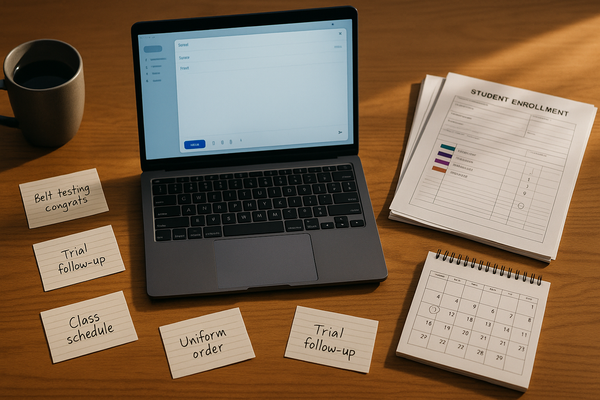
Belt promotions, lead nurture, and win-back sequences drive retention in high-churn environments. Learn the five core email types and timing strategies that work.

How martial arts studios can systematically build referral partnerships with pediatricians and occupational therapists as therapeutic allies.

Why QR check-in failed in 2011 but works now, what it costs, and how small tech upgrades deliver operational wins for dojos of all sizes.
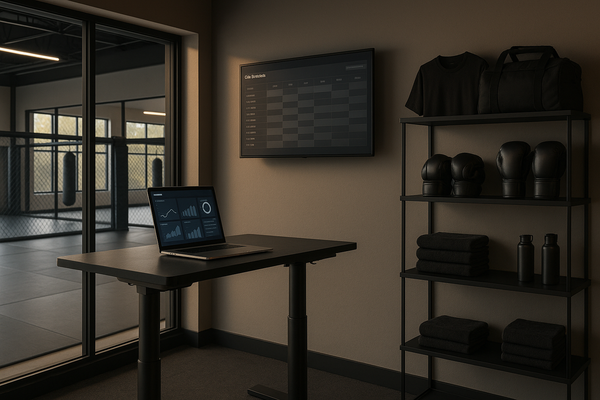
MMA studios average $254K annually vs. $105K for karate schools. Market bifurcation, tech consolidation, and demographic shifts force adaptation.

Industry News
The Premier Martial Arts litigation shows how consolidation creates encroachment risk. What franchisees should audit in territory clauses before conflicts escalate.

Studio Business
When a competitor closes, the window to capture displaced students is 7–14 days. Speed, referrals, and trust-building determine who wins the transfers.

Studio Business
Waitlisted students are high churn risks. Learn how automation, late-cancel fees, and community connection turn waitlist frustration into retention.

Studio Business
Why most martial arts schools fail: oversized space, churn blindness, and systems gaps. Data-backed survival strategies for first-time dojo owners.

Instructor Education
Four core principles reshape instruction, but certification remains fragmented. What US dojos are implementing now and what research actually proves.

Studio Business
With 76,364 US studios competing for flat participation, retention economics now determine profitability. First 90 days, belt systems, and community drive results.

Youth Development
Belt-based milestones, certification frameworks, and mentorship models that transform teenage students into junior instructors while improving retention.

Industry News
The US martial arts market hit $21.2B in 2026, but studio count doubled while participation stayed flat. Here's what schools actually earn and where profit hides.

Career
Market rates range from $45K to $73K annually, but most instructors leave leverage on the table. Here's how to use retention economics and IRS guidelines to your advantage.

Studio Business
Manual attendance tracking costs dojo owners 10-15 hours weekly. Digital systems reclaim that time while providing retention insights that directly impact profitability.

Studio Business
Industry guidance ranges from 5-80% of revenue. Here's what schools actually spend, why the numbers conflict, and how to determine the right budget based on ROI.

Technology
Curriculum tracking now defines the category. Why purpose-built platforms like Spark, Martialytics, and PushPress are gaining share while Mindbody loses ground.