How to Handle Difficult Parents at Your Martial Arts School
Most parent conflicts stem from misaligned expectations, not malice. Prevention through transparent onboarding and structured communication reduces the 8-10 monthly student losses caused by administrative friction.
Key Takeaways
- Parent conflicts typically stem from misaligned expectations about belt advancement timelines, discipline philosophy, and revenue structures rather than genuine malice, with Hollywood portrayals creating unrealistic progression benchmarks.
- The average martial arts school loses 8-10 students per month due to administrative friction including missed payment reminders, poor communication, and unclear progress tracking, much of which originates from unmanaged parent expectations.
- Parents who train themselves view the dojo as family and better understand training culture, while non-training parents primarily see it as a service, creating fundamentally different expectation frameworks that require distinct communication strategies.
- Transparent onboarding communication from the first handshake shifts the parent-instructor dynamic from adversarial to partnership, with clear philosophy and policy communication preventing most downstream conflicts.
- Software systems reduce operational friction by creating consistent professional communication, giving owners operational visibility, and building long-term loyalty through streamlined booking and payment experiences.
Why Parent Conflicts Are Rising in 2026
Dojo operators face an increasingly complex parent landscape shaped by conflicting service expectations. Public criticism of revenue-driven martial arts schools has made parents hyper-aware of multiple uniform fees, belt testing costs, and contract escalations. At the same time, recent high-profile complaints document frustration over students not receiving expected belt updates despite consistent attendance, with staff citing unstated performance standards.
The root causes break into three distinct categories. First, unrealistic advancement expectations emerge when parents worry their child isn't keeping pace with peers or absorb Hollywood montages suggesting black belts arrive in 90 days. Second, discipline philosophy gaps widen when non-training parents view martial arts primarily as childcare while training parents understand the cultural norms and developmental arc. Third, financial friction builds around non-refundable contracts and fee structures that weren't transparently communicated during enrollment.
The Training Parent vs. Service Consumer Divide
The distinction between families who train and those who view martial arts as purchased programming fundamentally shapes conflict patterns. Parents who also train look at the gym as family and appreciate what they receive because they directly experience the training process and cultural expectations. These parents rarely question belt timelines or coaching methods because they've internalized the developmental philosophy.
Conversely, parents seeking convenient childcare alternatives often struggle when their child faces correction or discipline. Some find it difficult not to intervene when they observe misbehavior, while others interpret structured teaching as harsh treatment. The proliferation of commercialized schools without strong traditional cultures has reinforced consumer mentality, where monthly fees create entitlement to visible outcomes regardless of student effort or readiness.
Similar dynamics appear across movement disciplines. Studios addressing difficult clients and dance programs managing overbearing parents report identical tension between families seeking professional development versus those purchasing conveniences.
Prevention Through Transparent Onboarding
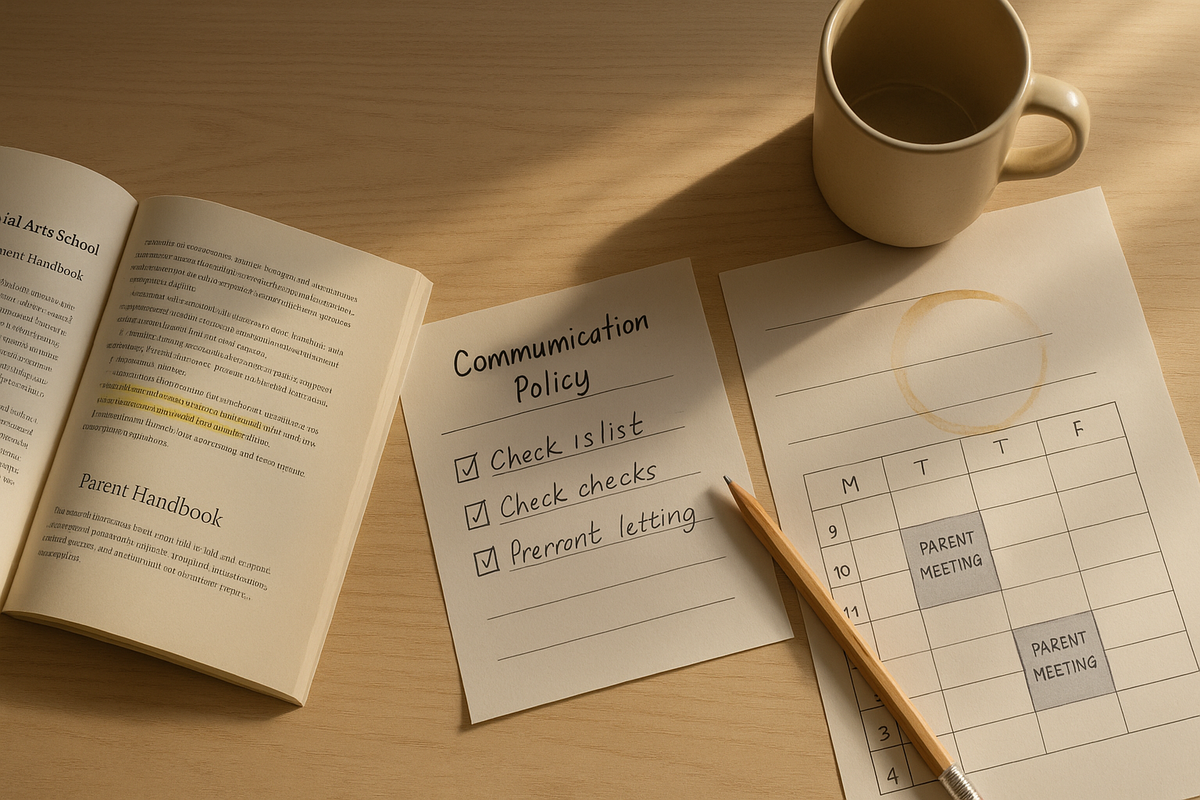
Clearly communicating school philosophy, policies, and expectations from the first handshake transforms parent relationships from transactional to collaborative. Effective onboarding addresses four critical areas before the first class begins.
First, establish realistic progression timelines. Frame martial arts as marathon training where every student's journey follows unique pacing, and explain the specific criteria governing belt advancement. Second, clarify behavioral management boundaries. When parents seek martial arts solutions for behavioral issues, discuss how training complements rather than replaces other strategies, and outline what instructors will and won't address during class time.
Third, document all revenue structures in writing. List every fee associated with advancement including uniforms, testing, and equipment before contracts are signed. Fourth, define parent involvement parameters. Specify whether parents observe from designated spectator areas or wait outside, and explain why mid-class interactions disrupt instructional flow.
Creating Physical and Procedural Boundaries
Creating a separate spectator area ranks among the best improvements schools can make to reduce distraction and unauthorized coaching. For highly involved parents, establish scheduled quarterly progress meetings that provide detailed feedback without disrupting class operations. Address belt progression concerns exclusively in these private sessions, focusing on documented advancement criteria rather than peer comparisons.
Real-Time Conflict Management Protocols
When parents offer unsolicited coaching tips during class, wait until after class finishes and speak with them privately while maintaining courtesy. Remind them that preserving instructional flow requires students to receive direction from a single authority during training time, and request they save feedback for post-class conversations. Frame the boundary as protecting their child's learning environment rather than rejecting their input.
For parents using the dojo as convenient drop-off childcare, enforce check-in and pick-up punctuality through enrollment policies. When late pickups become patterns, implement grace period fees that incentivize respect for instructor time without penalizing occasional emergencies.
The average martial arts school loses 8-10 students monthly due to administrative friction including missed payment reminders and unclear progress tracking. These operational failures compound parent frustration during disagreements, transforming resolvable conflicts into cancellations. Teaching staff to employ difficult conversation frameworks for boundary-setting preserves relationships while maintaining professional standards.
Technology as Friction Reducer
Software systems don't just automate administration but give owners operational visibility and reduce friction parents experience with booking and payments. Automated progress updates and attendance tracking create documentation that supports advancement decisions, while payment reminders eliminate the confusion that breeds financial disputes.
Modern parent communication systems address hierarchy challenges where the booking party differs from the attending student, ensuring all stakeholders receive consistent information. Studios implementing structured communication technology report 25% increases in client retention and 50% decreases in no-show rates by eliminating the administrative breakdowns that trigger parent complaints.
Regular digital progress reports satisfy parent desire for visibility without requiring instructor time during class hours. When advancement questions arise, documented attendance and skill assessments provide objective evidence supporting decisions, depersonalizing conversations that might otherwise feel confrontational.
The Newsweek Case Study: What Not to Do
A 2024 viral incident documented parent fury when blue-uniform students didn't receive expected belt updates despite consistent attendance. School staff cited class attendance and performance standards that hadn't been clearly communicated during enrollment, creating perception of arbitrary gatekeeping tied to revenue extraction through extended contracts.
The conflict violated every prevention principle. The school failed to establish objective advancement criteria during onboarding, didn't provide regular progress documentation, and allowed parents to form peer-comparison expectations by keeping cohorts together without explaining individual progression timelines. When confrontation occurred, staff defended decisions by introducing previously unstated standards rather than pointing to agreed-upon documentation.
This public relations disaster illustrates how operational shortcuts compound into brand damage. Clear upfront communication about variable advancement timelines, documented skill assessments after each class, and quarterly progress meetings would have prevented both the conflict and its viral amplification.
How Parent Conflict Drives Staff Burnout and Churn
Unmanaged parent expectations don't just cost student retention but accelerate instructor burnout. When staff members repeatedly negotiate undocumented policies, defend advancement decisions without objective criteria, and absorb blame for leadership's communication failures, occupational satisfaction plummets. Research on retention and staff burnout confirms that frontline employees leave organizations where they lack institutional support during client conflicts.
The 8-10 students lost monthly due to administrative friction represents only the visible attrition. For every family that cancels, several more remain enrolled while privately dissatisfied, creating negative word-of-mouth that suppresses new enrollment. Staff working in environments with constant low-grade parent tension experience cumulative stress that manifests as turnover, forcing operators into expensive recruitment cycles that further destabilize operations.
Operators must recognize parent management as institutional responsibility rather than individual instructor competency. Providing staff with documented policies, conversation scripts for common conflicts, and technology that automates friction points transforms parent interactions from draining confrontations into routine professional exchanges.
What This Means for Studio Operators
Editorial analysis, not reported fact:
The shift from viewing difficult parents as personality problems to recognizing them as operational challenges marks mature business leadership. Most parent conflicts signal preventable communication gaps rather than unreasonable individuals. The parents questioning belt timelines, frustrated by unstated fees, or intervening during class typically respond well to proactive transparency and structured boundaries established before problems emerge.
Operators should audit their current enrollment process against these questions: Do families receive written advancement criteria before signing contracts? Does onboarding explain the difference between attendance and mastery-based progression? Are all fees listed in a single document parents can reference? Have you created physical and procedural barriers preventing mid-class parent coaching? Can you produce documented skill assessments if a parent questions advancement decisions?
The investment in prevention infrastructure through transparent policies, spectator area modifications, and communication technology costs less than the revenue lost to monthly churn and staff replacement cycles. More importantly, it allows instructors to focus energy on teaching rather than conflict management, creating the positive training environment that originally attracted families to martial arts.
In 2026, as evolving parent expectations demand professional standards and liability awareness, operators who master parent partnership will differentiate themselves in increasingly competitive markets. The dojo that frames itself as collaborative developmental partner rather than purchased service provider builds loyalty that survives temporary dissatisfaction and generates referral growth that reduces marketing dependency.
Sources & Further Reading
- Martialytics: How to Handle Difficult Parents in Your Dojo, covering communication strategies and conflict prevention frameworks
- ClubWorx: The 3 Biggest Challenges Dojo Owners Face, documenting monthly student loss due to administrative friction
- MartialTalk: Parents Who Train vs. Parents Who Don't, exploring how training background shapes parent expectations
- Newsweek: Fury at What Martial Arts School Does to Children, case study of belt advancement conflict
- ClassCard: Martial Arts School Management, examining software solutions for operational friction reduction
- Ikigai Way: The Tricky Path of Martial Arts Parents, analyzing unrealistic advancement expectations
Editorial coverage of publicly reported industry developments. Dojo Practice has no commercial relationship with any companies named.